
Our second day in Kyoto felt like stepping through the pages of a storybook—each temple, pathway, and bowl of ramen revealing a new chapter in this magical city.
Kinkakujichō – The Golden Beginning
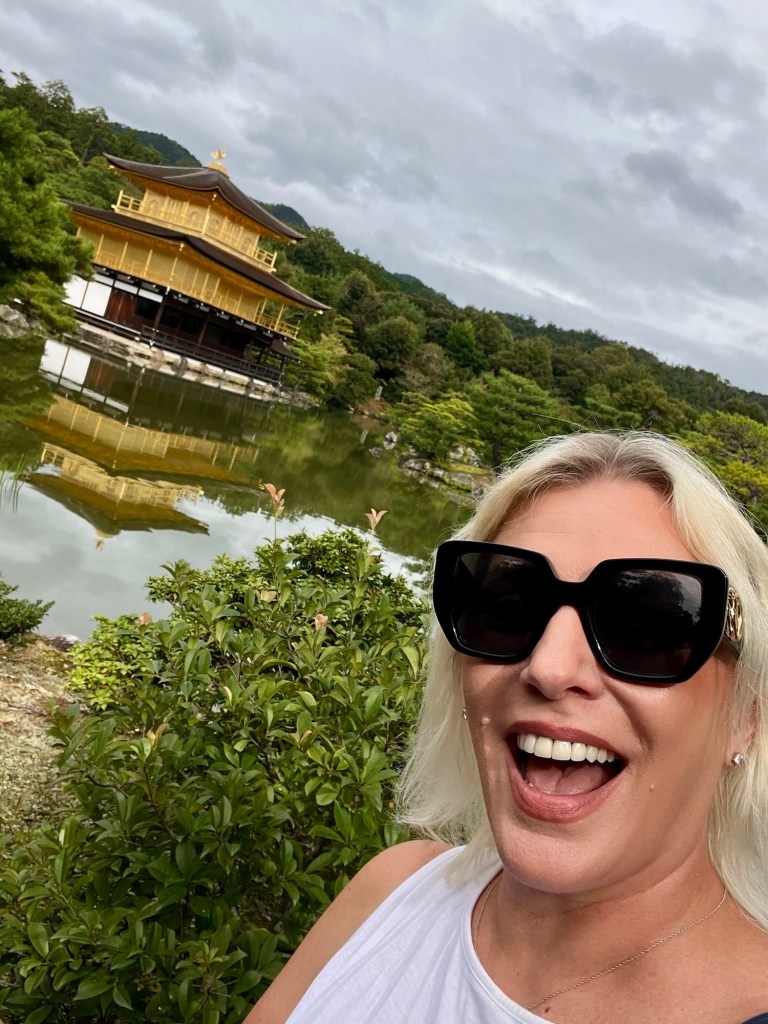
We started the day at Kinkakujichō, home to Kyoto’s most dazzling jewel: Kinkaku-ji, or the Golden Pavilion. The moment the sun hit that gold leaf–covered temple shimmering on the pond, I think my jaw actually dropped.
Fun fact: The pavilion’s top two floors are completely covered in real gold leaf, a symbol of purity and the afterlife in Zen Buddhism. Originally built in the 14th century as a retirement villa for shogun Ashikaga Yoshimitsu, it was later converted into a Zen temple—because apparently, even shoguns need a serene afterlife plan.
As you walk the peaceful path around the temple, you’ll find little spots where you can toss coins for luck—and yes, I tossed more than a few, hoping for good fortune (and maybe a few extra bowls of ramen). At the end of the walk, visitors can light candles for their heart’s desires. There are candles for everything—from health to happiness to, my personal favorite, finding the love of your life. Because let’s be honest, if the universe is taking requests, Kyoto feels like the right place to make one.
Nijō-jō Castle – The Song of the Shoguns
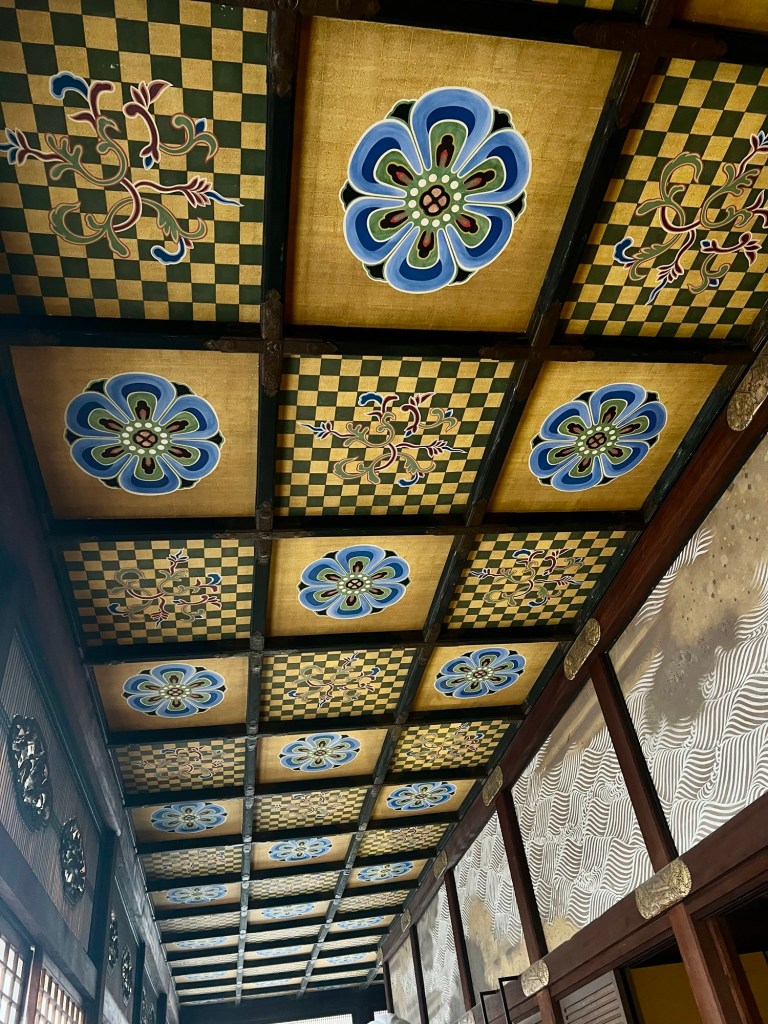
Next, we visited Nijō-jō Castle, a UNESCO World Heritage Site that once housed the Tokugawa shoguns when they came to Kyoto. The sprawling grounds are stunning—wide courtyards, perfectly manicured gardens, and massive stone walls that whisper centuries of history.
But the real magic begins when you step inside and hear the nightingale floors. These wooden corridors were designed to chirp like songbirds with every step, an ingenious early security system to alert guards of intruders. The sound is delicate, melodic, and entirely enchanting—like walking on music.
Photography isn’t allowed inside, which makes it all the more tempting when you look up at those breathtakingly painted ceilings—intricate, gold-accented designs that make you consider breaking rules you never thought you would. (Don’t worry, I resisted… mostly.)
Ramen & Retail Therapy in Shikibuchō

After all that walking and wonder, we headed to Shikibuchō for some shopping and food—and wow, Kyoto knows how to deliver both. The shops are vibrant, packed with everything from handcrafted trinkets to stylish kimonos and quirky souvenirs.
We refueled with a bowl of rich, steaming ramen that just hit every note—savory broth, springy noodles, and that perfect runny egg. It was one of those meals that makes you involuntarily smile mid-bite. Simple joy in a bowl.
Fukakusayabunouchichō – Through the Endless Orange Arches
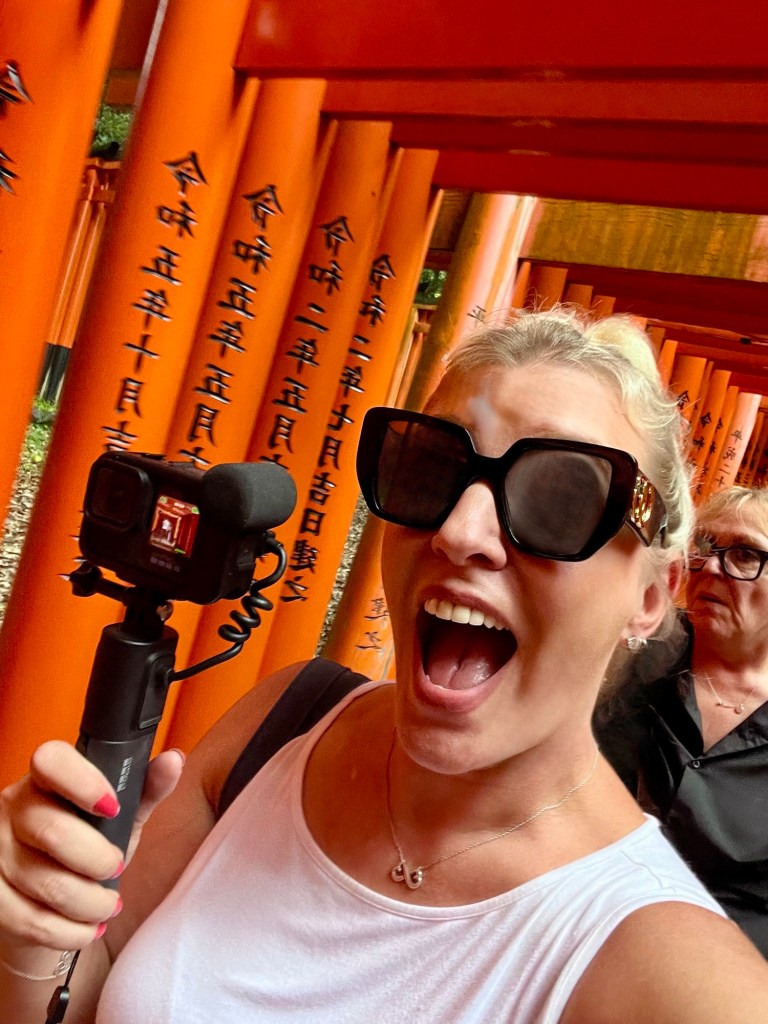
From there, we made our way to Fukakusayabunouchichō, home to the famous Fushimi Inari Taisha—the shrine of endless orange arches. Thousands of torii gates line the mountain path, forming tunnels of brilliant vermilion that seem to stretch into infinity.
Fun fact: Each gate is donated by a business or family, with inscriptions representing gratitude and prosperity. The shrine itself is dedicated to Inari, the Shinto god of rice and business—so it’s a sacred stop for both farmers and entrepreneurs alike. Walking through those tunnels feels like a meditation in motion; every step hums with the energy of centuries of prayers.
Kiyomizu-dera – The View That Steals Your Breath
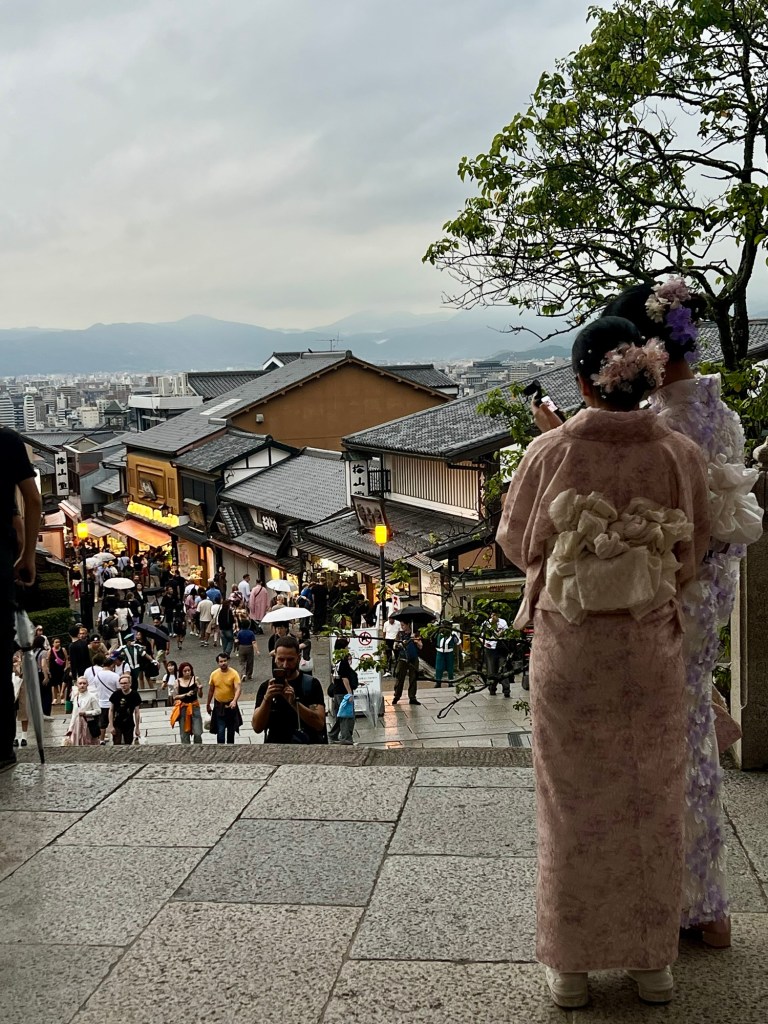
Our last stop of the day was Kiyomizu-dera Temple, perched high above Kyoto and offering one of the city’s most breathtaking views. The temple’s name means “Pure Water Temple,” after the Otowa Waterfall that flows beneath it.
Fun fact: The temple’s massive wooden stage was built without a single nail—a masterpiece of traditional Japanese architecture. From that stage, the panoramic view of Kyoto is absolutely spectacular, especially at sunset.
The gardens are peaceful and lush, and the path leading up to the temple is lined with charming shops selling everything from handcrafted pottery to sweet treats. Naturally, I stopped for some Kobe beef skewers—which, at roughly $26 USD, might not have been the best investment… but sometimes, currency conversion apps make a foodie adventure feel like fate. No regrets.

Kyoto in a Day
Kyoto is a city that captures the heart through its contrasts—ancient temples and modern shops, whispered prayers and lively street chatter, quiet gardens and bustling ramen bars. Every corner seems to tell a story, and every meal feels like an offering. Kyoto isn’t just a destination—it’s an experience, one that stays with you long after you’ve left.
 Felicity Arvizu takes on...