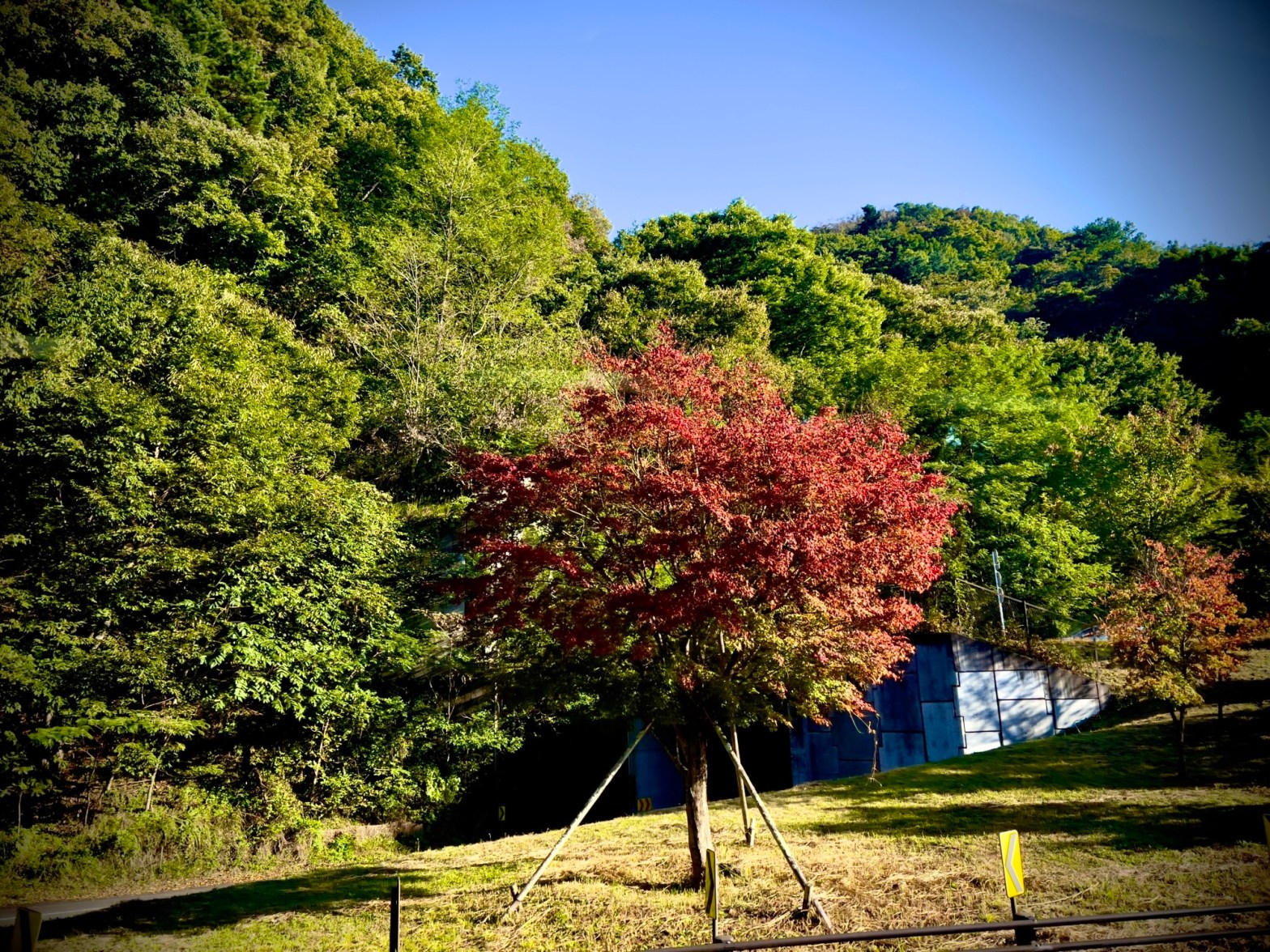
Leaving Kyoto felt a bit like waking up from a dream. The calm temples, the quiet whispers of bamboo, the scent of matcha in the air—all fading in the rearview mirror as we began our long road trip toward Mt. Fuji. It’s one of those drives that feels like you’re slowly peeling back layers of Japan’s geography and soul, moving from cultural heartland to the country’s most iconic natural wonder.
Somewhere along the highway, in that delightful middle-of-nowhere stretch between Kyoto and Fuji, we made what turned out to be one of the most unexpectedly magical stops of the trip—NEOPASA Okazaki Nobori. For those who haven’t had the pleasure, this isn’t your average roadside rest area. Think more “mini futuristic shopping village” than “gas station pit stop.”
And there, tucked inside, was the humble hero of modern Japan: 7-Eleven.
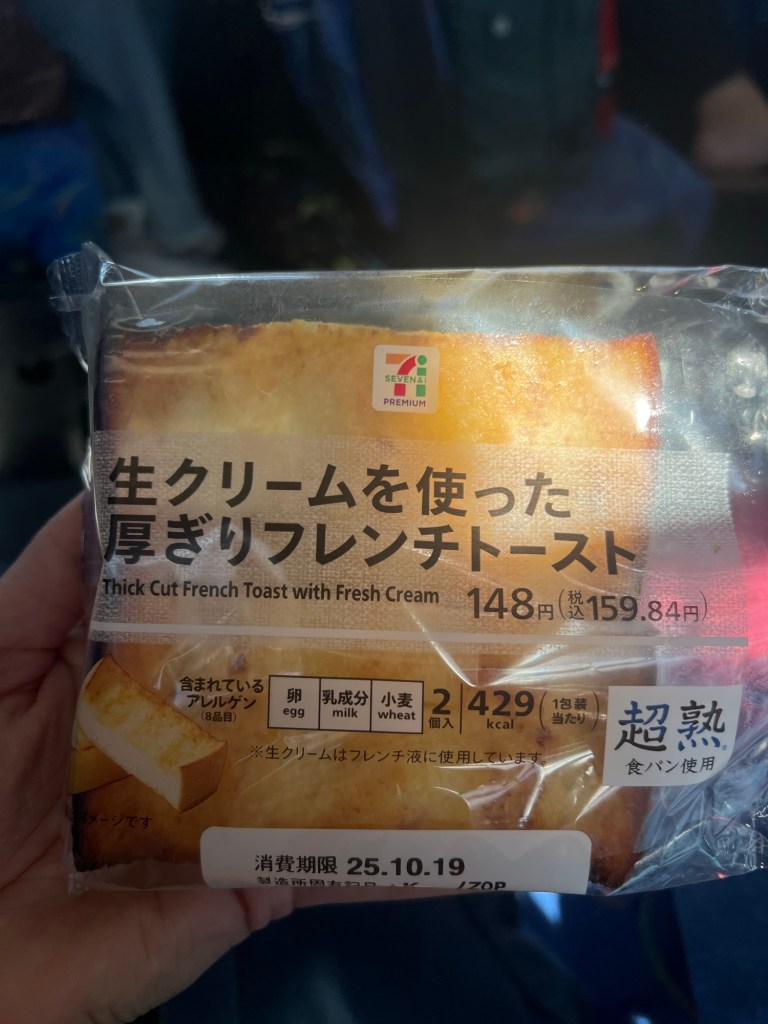
Now, if you’re from the U.S., you might be imagining questionable hot dogs and sad-looking taquitos that make you rethink every life choice that led you to that moment. But in Japan? 7-Eleven is a culinary wonderland. Perfectly packaged onigiri (rice balls), steaming bowls of curry rice, fresh sandwiches that somehow taste like they were made by angels, and desserts that look straight out of a Tokyo pâtisserie. I may or may not have eaten my weight in egg salad sandwiches—and I’m not even sorry.
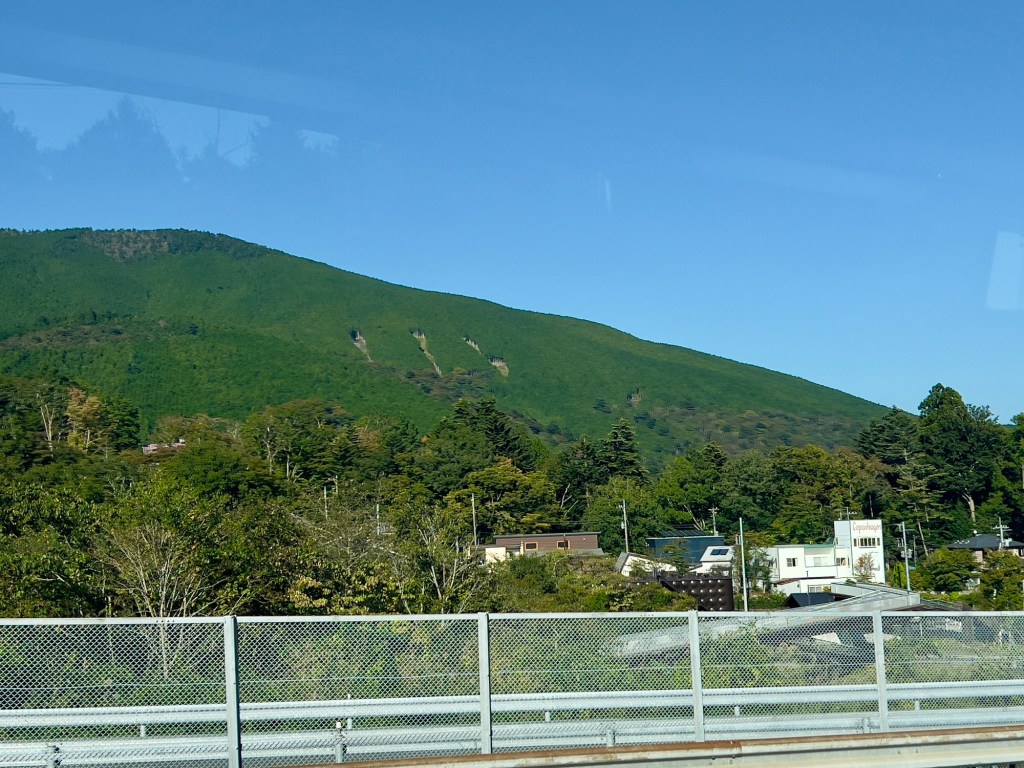
Back on the road, I was struck by something I hadn’t expected at all: Japan is incredibly mountainous. For an island nation, I thought it would be rolling hills and coastal views, but over 70% of Japan is actually mountains! The drive is a continuous dance through tunnels, across bridges, and up winding roads that hug the ridgelines of ancient peaks. It’s stunning, humbling, and a reminder that Mt. Fuji isn’t Japan’s only mountain—it’s just the most famous one.
Passing Aokigahara (The “Suicide Forest”) on the Way to Mt. Fuji
As you approach Mt. Fuji, the road skirts the edge of Aokigahara Forest, a vast, quiet stretch of woodland often referred to in the media as the “suicide forest.” From the road, it looks almost impossibly serene—lush green, sun-dappled, and peaceful. But its beauty is haunting: the forest is extremely dense, growing over hardened volcanic rock from an ancient eruption of Mt. Fuji. The thick canopy blocks much of the sunlight, creating a natural silence that feels otherworldly.
Aokigahara has long carried a heavy cultural reputation. While the forest itself is not inherently dangerous, it has become known in popular culture as a place associated with despair, and this gives it a solemn, sobering presence. The contrast between what you see from the roadside—calm, untouched nature—and the struggles some people carry into it is striking and emotional.
If you or anyone you know is struggling with feelings of hopelessness, depression, or thoughts of self-harm, there is help, and you don’t have to face those feelings alone. Speaking to someone can make a tremendous difference.
If you’re in Japan:
• Tokyo Mental Health offers English-language support.
• TELL Lifeline (Japan): 03-5774-0992 — open daily.
International resources:
• In the U.S., call or text 988.
• In the U.K. & Ireland, Samaritans are available at 116 123.
• In Canada, call or text 988.
• If you’re elsewhere, local crisis numbers can be found at http://www.iasp.info/crisis-centres or your country’s health services.
Reaching out for help is a sign of strength, not weakness—there are people who want to listen, support, and help you find your way back to safety and peace.
As we approached the Fuji region, the scenery began to shift. Lakes appeared like mirrors in the landscape, reflecting clouds that looked almost close enough to touch. And thanks to a sudden cold spell the night before, the maple trees had just started to turn that unbelievable shade of brilliant red that Japan is so famous for in autumn. It felt like the world had turned up its saturation dial just for us.
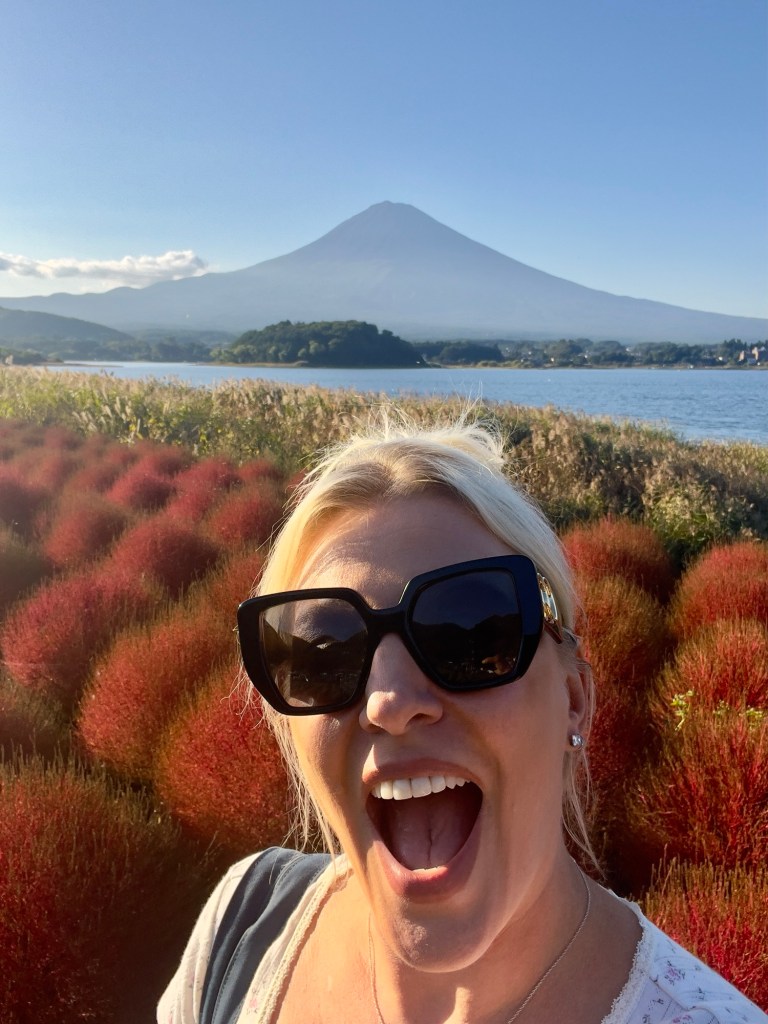
And then, there she was—Mt. Fuji, standing tall, symmetrical, and impossibly serene. We made our way to Oishi Park, one of the best vantage points to view the mountain, and it did not disappoint. Fun fact: Mt. Fuji is only visible about 80 days a year—the rest of the time she hides shyly behind clouds or mist. So to arrive on a crystal-clear day? That’s pure luck, and I don’t take it lightly.
Oishi Park is a photographer’s dream: a meticulously landscaped garden filled with seasonal flowers, from lavender in summer to cosmos in autumn. You can frame your shot of Fuji with colorful blooms in the foreground, or capture the reflection of the peak in the still waters of Lake Kawaguchiko just beyond. Every direction you turn feels like a postcard waiting to happen. We must have taken a hundred photos—each one more breathtaking than the last.
As the sun began to dip behind the mountain, we made our way to Oshino Shibokusa, a charming village nestled between Lake Yamanaka and Lake Oshino. It’s known for its series of crystal-clear ponds fed by snowmelt from Mt. Fuji that’s been filtered through volcanic rock for decades. The most famous, Oshino Hakkai, is considered sacred and has been revered for centuries. The clarity of the water is mesmerizing—you can see every pebble, every ripple, like time itself has slowed down inside the pond. Locals treat it with quiet respect, and it’s easy to see why—it’s not just beautiful, it feels spiritual.
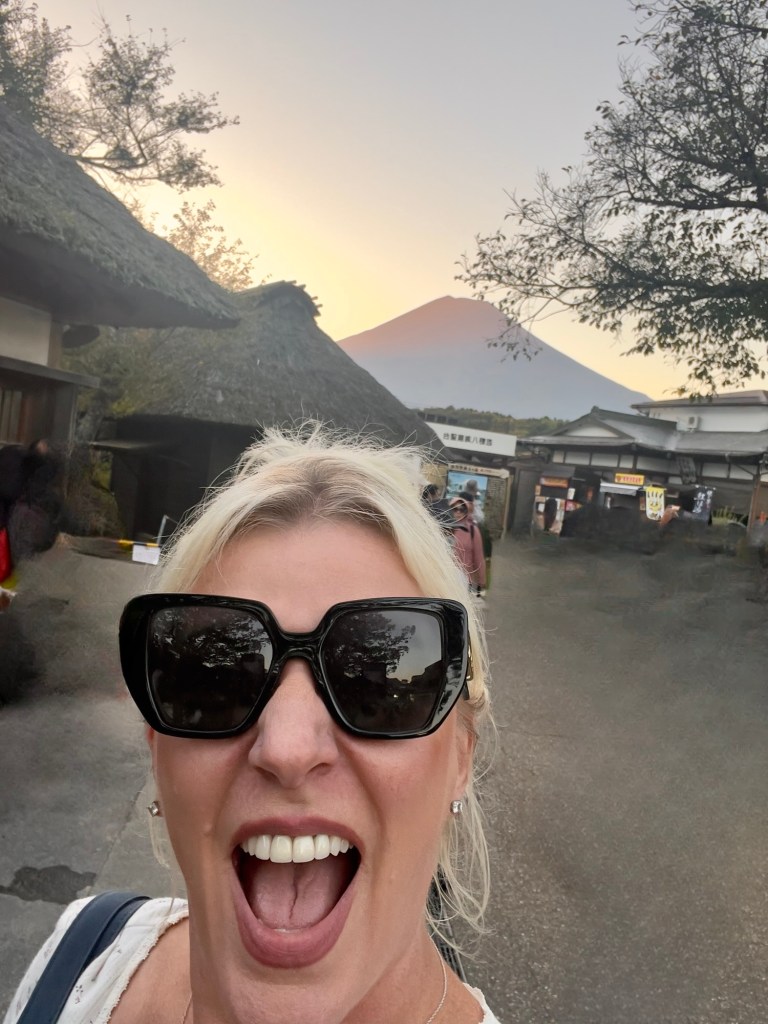
The perfect ending to a day full of wonder happened when we checked into Hotel Mt. Fuji, where we discovered the true bliss of Japanese hospitality: the onsen.
Slipping into the outdoor hot spring bath, with the cool night air brushing my face and the faint outline of Fuji silhouetted against the stars, was nothing short of magical. The water, rich with minerals, seemed to melt away every ounce of fatigue from the road. There’s something about soaking in a natural hot spring while staring at Japan’s most sacred mountain that makes you realize—this is what travel dreams are made of.
 Felicity Arvizu takes on...