“You Gotta Get Out of Here… Sorry” — The Tagline We Didn’t Know We Needed

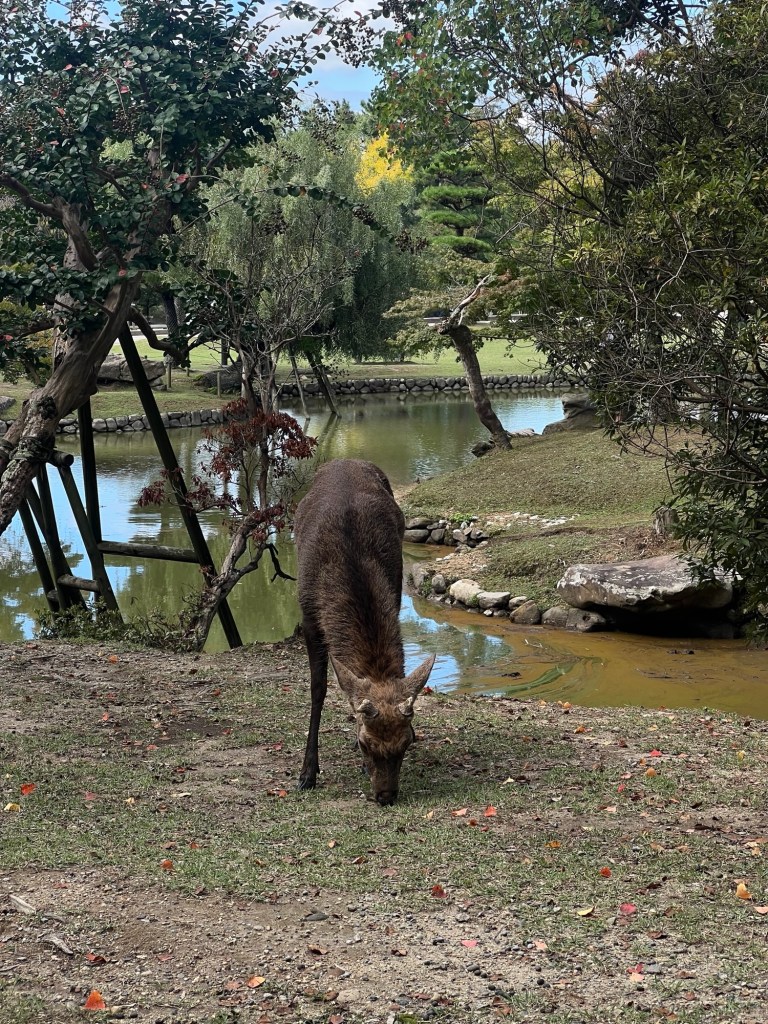
If Osaka was a boisterous party host handing out sake shots and unsolicited life advice, then Kyoto is her elegant cousin who drinks matcha in silk and only speaks when it’s profound. But before we traded neon for nature, we made a very necessary detour: Nara Park—home to 1,200 semi-domesticated deer, an ancient temple or two, and the most unexpectedly polite wildlife encounter of my life.

The thing about Nara is, it’s peaceful… until it’s not. You stroll into this massive park thinking it’s going to be all Zen gardens and gentle breezes, and then—bam!—a herd of deer starts bowing at you for snacks like tiny velvet diplomats.

Nara Park: Where the Deer Have Better Manners Than Most Exes

Yes, they actually bow. Fun fact: it’s a learned behavior. Locals used to bow to show respect before feeding them, and the deer, being both adorable and opportunistic, caught on. Now they bow first—no marriage certificate required.

Between feeding the deer and dodging the occasional headbutt from an impatient one (apparently I wasn’t distributing rice crackers fast enough), we found ourselves at the entrance to one of Japan’s most awe-inspiring landmarks: Todai-ji Temple.

Todai-ji Temple: Big Buddha Energy

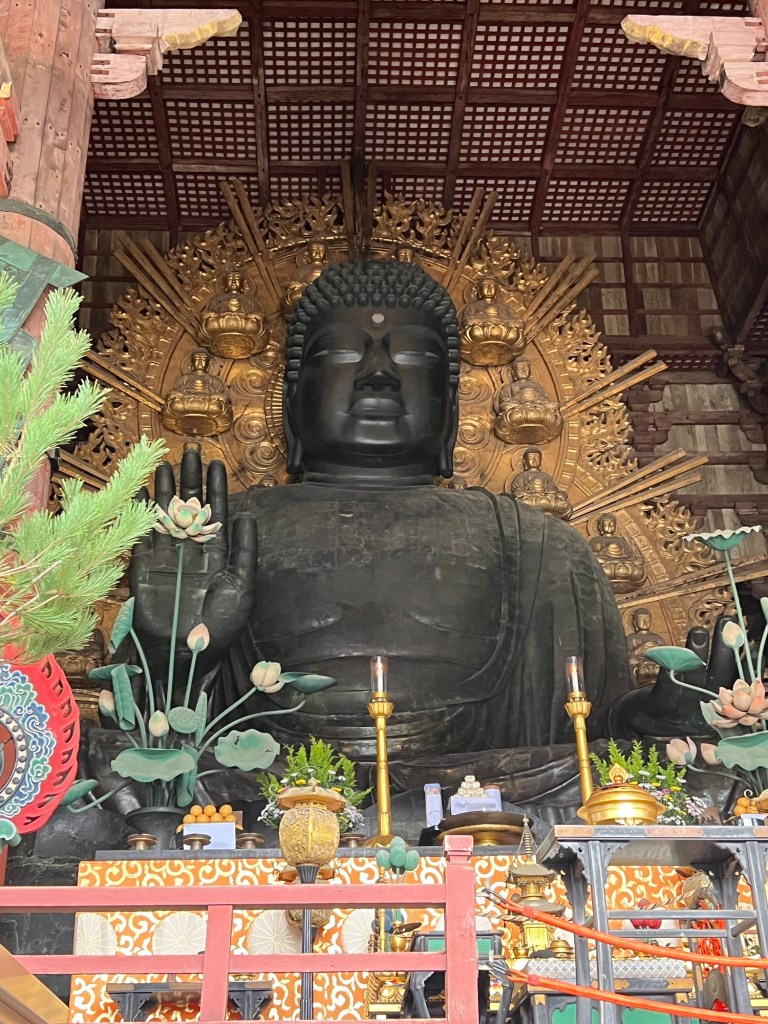
Todai-ji isn’t just a temple—it’s the temple. Built in the 8th century, it houses the world’s largest bronze Buddha, standing over 49 feet tall. (That’s roughly the height of a five-story building, or, if you prefer, two and a half stories of emotional growth.)

Walking into the Great Buddha Hall feels like entering another realm. The sheer scale of it makes you go quiet, even if your usual volume setting is “group chat at brunch.” The air hums with centuries of reverence. I couldn’t help but feel small—in the best way possible.

And because life loves balance, right next to all that serenity is the famous Buddha’s Nostril Hole Challenge—a wooden pillar with a hole the same size as the statue’s nostril. Legend says if you can squeeze through it, enlightenment awaits. Spoiler: I didn’t try. I’ve already been through one tight squeeze this decade.

Kasuga Taisha Shrine: Lanterns and Wishes

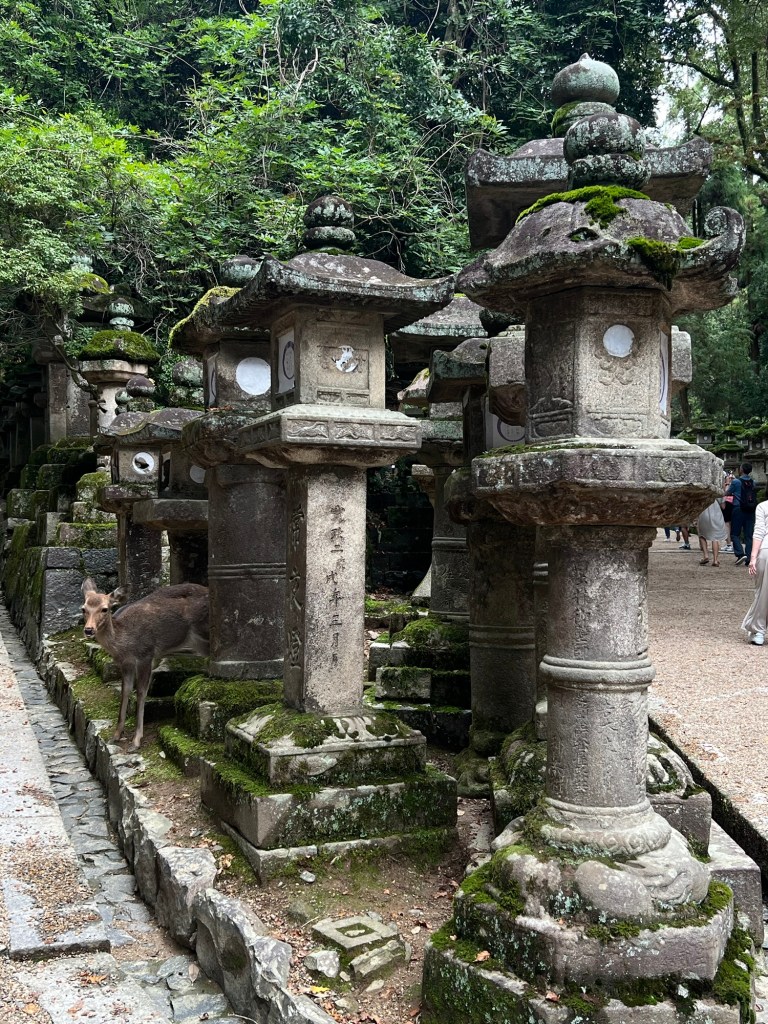
A short, shaded walk from Todai-ji led us to Kasuga Taisha Shrine, famous for its 3,000 stone and bronze lanterns that line the path like an ancient runway. Every February and August, they’re all lit during the Lantern Festivals.

The shrine itself is dedicated to the deity of protection, and after the year I’d had, I left a small wooden ema (wish plaque) asking for strength, joy, and a devastatingly handsome travel companion who doesn’t leave his socks everywhere.

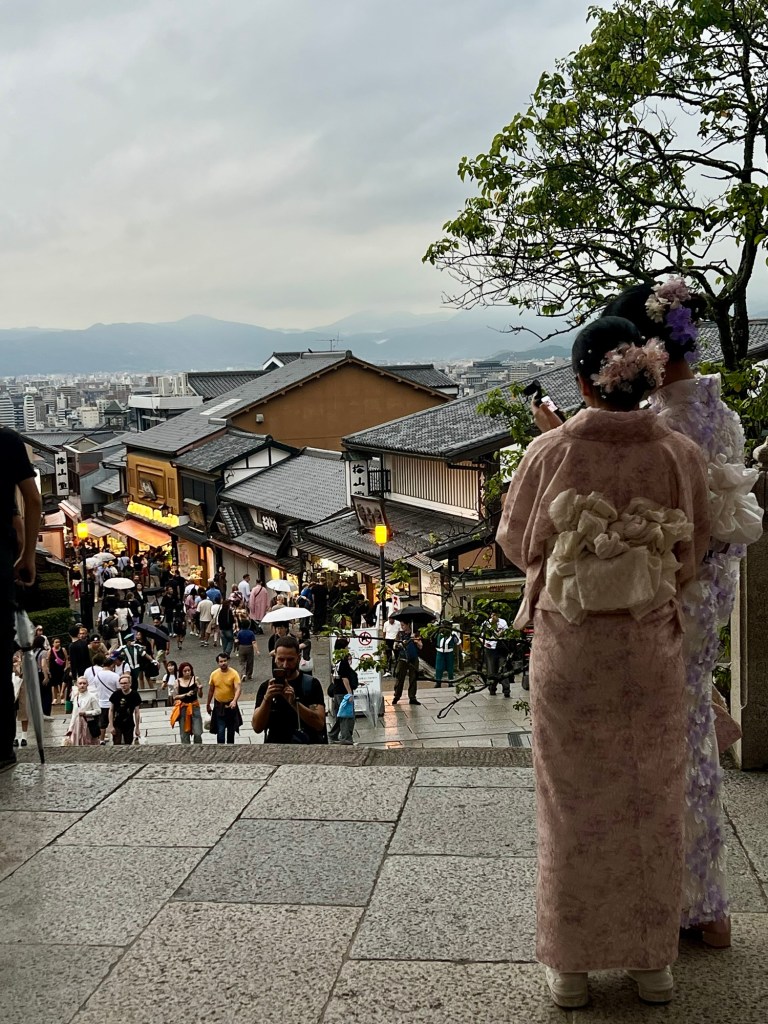
Kyoto: Bamboo, Beauty, and Being Told to Leave (Politely)

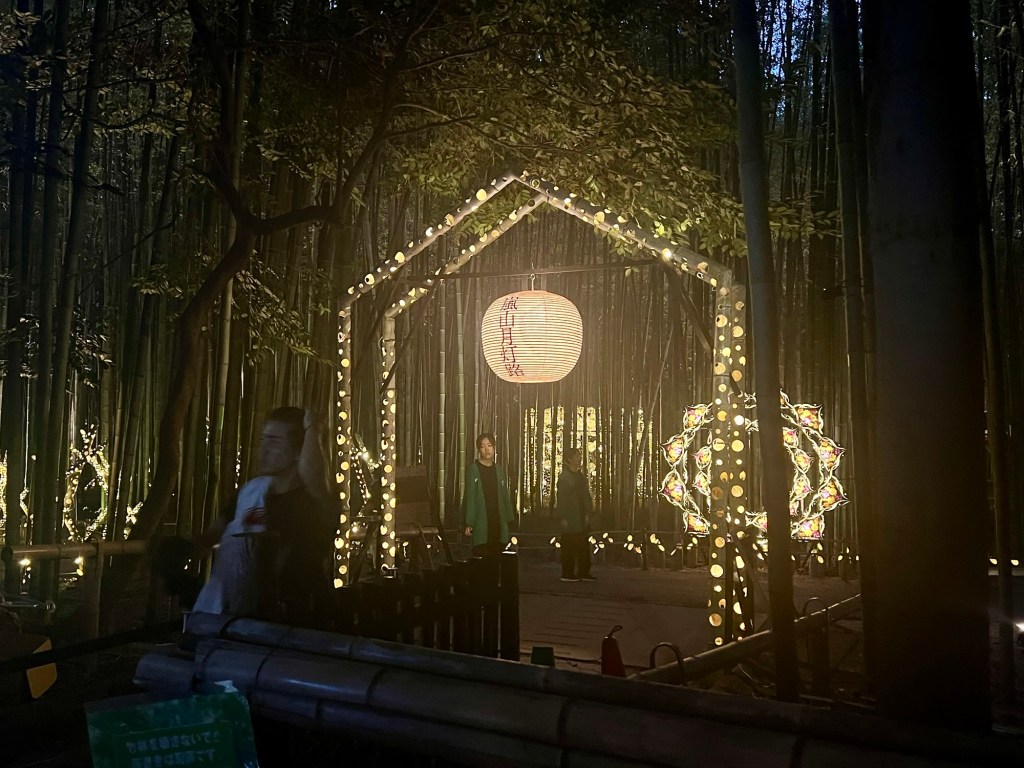
From Nara, we continued on to Kyoto, where our day ended in the famous Arashiyama Bamboo Grove—the kind of place that makes you whisper without realizing it. The path winds through impossibly tall bamboo stalks that sway in the breeze, whispering secrets older than anything we could possibly worry about.

As daylight faded, we heard whispers of the bamboo light-up event happening that evening. So naturally, we did what any group of slightly jet-lagged, overly confident women would do: we tried to sneak in early.
And that’s when we met our new favorite phrase.

A kind, soft-spoken attendant intercepted us mid-attempt and said, in the gentlest voice imaginable,

“You gotta get out of here… sorry.”

No anger. No scolding. Just pure Japanese politeness wrapped in firm boundaries. We backed out laughing, repeating it to ourselves until it became the unofficial tagline of the trip.
Late checkout?
“You gotta get out of here… sorry.”

One more drink?
“You gotta get out of here… sorry.”

Lingering on an ex’s Instagram page?
You already know.

The Lesson in the Leave-Behind

As the lanterns began to glow and the night deepened around Kyoto, I realized how poetic that phrase really was. Sometimes, life itself says, “You gotta get out of here… sorry.” Out of a relationship. Out of a comfort zone. Out of who you were when you stopped choosing yourself.

And yes, it stings a little—like being shooed out of a bamboo forest you were desperate to see—but it’s also an invitation. To move forward. To grow. To make space for what’s next.

All of it reminded me that sometimes, the most polite way the universe can say “you’re ready for more” is with a smile and a gentle,

“You gotta get out of here… sorry.”

Jet Lag, Joy, and Japanese Toilets — a Love Story of Sorts

There’s a unique thrill in walking through LAX solo, passport in one hand, emotional baggage checked at the gate. It’s that unmistakable scent of overpriced coffee, fresh opportunities, and the faint aftertaste of “I’m doing just fine, thank you.”

It all started six months earlier, over gin and laughter at a Galentine’s weekend, when I did what any self-respecting woman with a bad case of wanderlust would do — I invited myself on someone else’s trip. Luckily, these women are the kind who embrace spontaneity, so before long, we had a group chat, an itinerary, and a shared countdown to Japan.

My dear friend Shannon and I roomed together — as we’ve done countless times over the past 25 years. Our friendship has weathered nearly everything life can throw at two people: a brain tumor, buying and selling of homes, marriages, divorces, late nights, and laughter that healed more than a few heartbreaks. What’s evolved between us is something deeper than friendship — it’s family. And traveling with someone who knows your quirks, your caffeine requirements, and your pre-coffee silence? That’s pure luxury.

The flight itself was a blur of snacks, movies, and “Can you believe we’re really doing this?” grins. When we finally landed in Osaka, the jet lag was no match for our excitement. Japan had been calling — and we were finally answering. Destination: Osaka, the loud, proud, food-loving heart of Japan. If Tokyo is the sophisticated older sister, Osaka is the one doing karaoke at brunch and convincing you to take another shot of sake.

First Stop: Osaka Castle

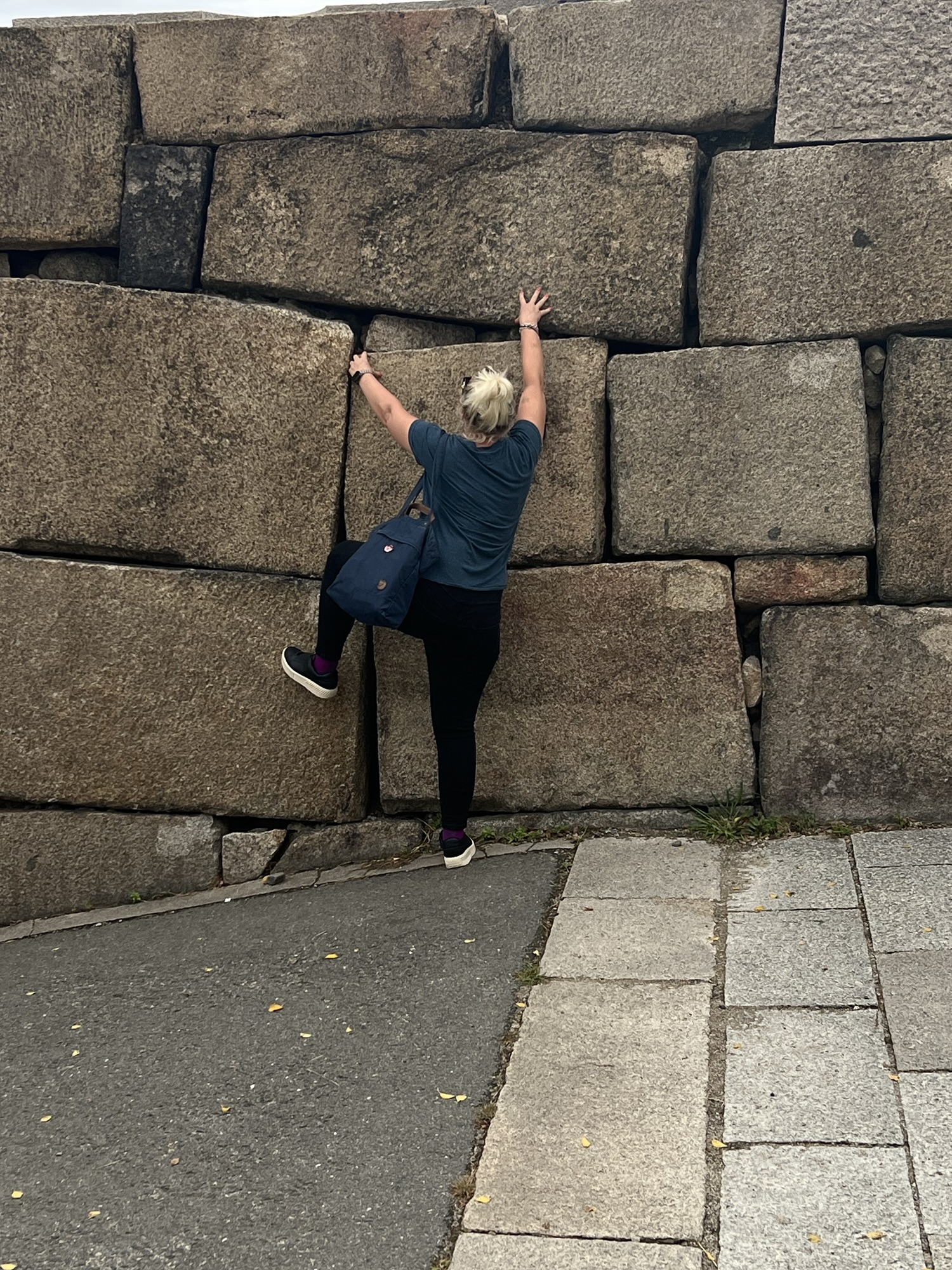
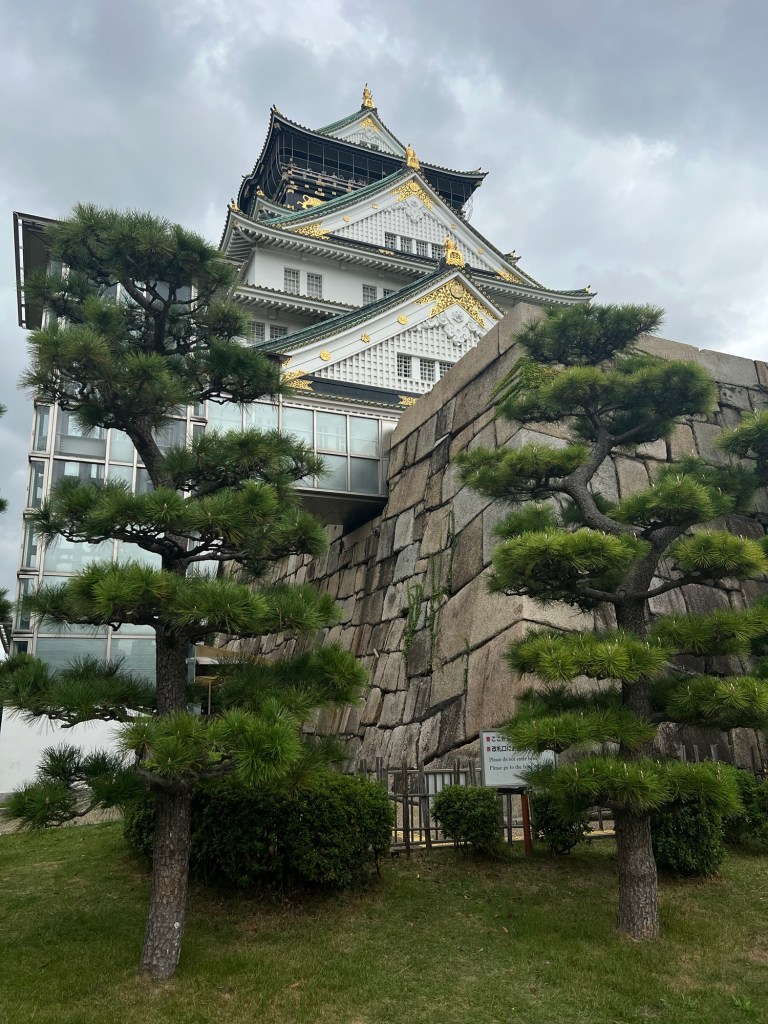
Our adventure officially began at Osaka Castle, one of Japan’s most striking landmarks. Rising proudly above the park’s greenery, the castle looks like something plucked straight out of a storybook — white walls, turquoise roofs, and golden accents that glint in the sunlight.

Fun Facts about Osaka Castle:

  • Originally built in 1583 by the legendary warlord Toyotomi Hideyoshi, the castle played a major role in unifying Japan.
  • The structure you see today is actually a 1931 reconstruction, now housing a museum filled with samurai armor, historical artifacts, and sweeping panoramic views from the top.
  • The castle grounds cover over 100 hectares — perfect for a peaceful walk or a snack stop.
  • During cherry blossom season, the surrounding park turns into one of Osaka’s most photogenic spots (a strong reason to come back).

After wandering through the grounds and snapping photos, we stumbled upon a street vendor selling milk shaved ice — the softest, creamiest frozen treat imaginable. I swear it could convert even the most devoted ice cream purist. Sweet, milky, and blissfully refreshing, it was the perfect way to cool off after exploring in the afternoon sun.

Pro tip: Don’t stop at just one vendor. Try a little bit of everything — takoyaki (fried octopus balls), okonomiyaki(savory pancakes), and anything skewered, grilled, or deep-fried. Osaka is called “Japan’s Kitchen” for a reason — you’ll want to taste your way through it.

An Afternoon in Dōtonbori

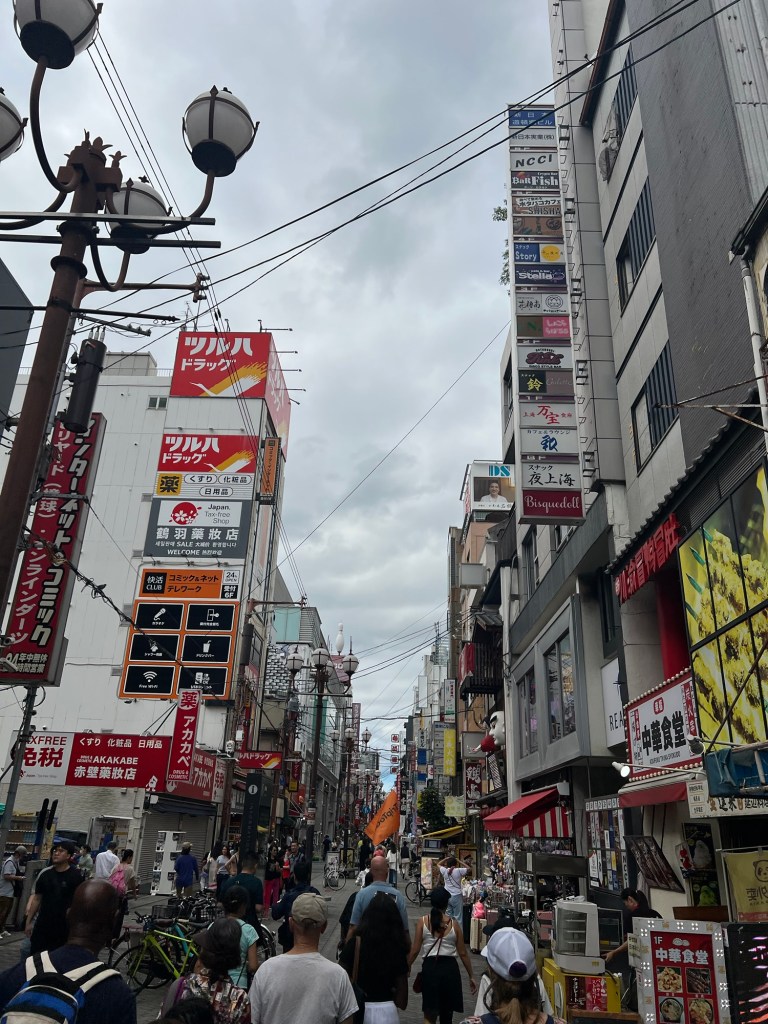
That afternoon, we headed into Dōtonbori, the pulsing heart of Osaka. If Osaka Castle is where you go to soak in the past, Dōtonbori is where you come alive in the present.

Fun Facts about Dōtonbori:

  • The Dōtonbori canal was completed in 1612, transforming the area into an entertainment and theater district centuries ago.
  • Today, it’s one of Osaka’s most famous destinations for shopping, dining, and night photography.
  • You can’t miss the Glico Running Man — a massive neon sign that’s been lighting up the area since 1935. It’s basically a rite of passage to pose in front of it.
  • The local saying here is “kuidaore”, meaning “eat until you drop.” (Challenge accepted.)

We wandered around, soaking in the chaos of color, the sizzle of street food, and the constant stream of laughter that filled the streets. We shopped, we ate (again), and we got lost more than once — the best kind of lost.

At one point, Shannon and I stopped mid-street just to take it all in. The lights reflected in the canal, the hum of chatter around us, the feeling that we were exactly where we were meant to be.

A Toast to Friendship and New Adventures

Traveling with a friend who’s seen every version of you — the ambitious one, the heartbroken one, the resilient one — is something special. There’s a freedom in it. No pretending, no perfection required. Just laughter, shared wonder, and an understanding nod when someone’s energy dips or snacks are urgently required.

Our first day in Japan wasn’t just about exploring Osaka — it was about rediscovering what makes travel so incredible: connection, curiosity, and a little chaos along the way.

Felicity Arvizu Takes On: Washington, D.C.

They say Washington, D.C. is the beating heart of American democracy. Personally, I’d say it’s more like a heartbeat monitor—beep… beep… pause… “oh, is this thing still on?” But after three days in the nation’s capital, I can confirm: it’s a city worth taking on, even if you nearly end up knocking on the White House door (more on that later).

Day One: Hip Hotels & Political Landmarks

I stayed in Foggy Bottom (yes, that’s the real name) at Truly Yours D.C., a hotel so hip I felt like I should have worn leather pants to check in. The Peruvian fusion food was chef’s kiss, but the real highlight? Their pisco cocktails. Let’s just say I was on a first-name basis with the bartender before unpacking my suitcase.

Fueled by fish ceviche and liquid courage, I ventured to the National Art Gallery, which might just house the world’s largest Degas collection. I’ve never felt so inspired to take ballet—until I remembered I’m 46 with a knee that squeaks louder than a Costco shopping cart.

Next up: the Capitol Building and the Supreme Court, which was ironically under construction during my visit. It felt symbolic.

And because I’m naturally curious (read: nosy), I happened to be near the White House when a big black SUV rolled out of the gates. The gates opened. I thought, Well, don’t mind if I do. Spoiler alert: that is not an invitation to go knock on the front door and ask if the President is home. Security made that very clear.

I ended the day at the National Botanical Garden, which was far safer and smelled better than Secret Service side-eye.

Day Two: Museums, Emotions, and National Guard Selfies

Pro tip: visit the museums in the reverse order of my adventure. Trust me.

I started at the National Museum of African American History and Culture, and it’s one of the most powerful museums I’ve ever set foot in. It’s heartbreakingly honest about slavery, racism, and oppression in America. I left heavy with the reality of how far we still have to go.

Next, the National Museum of American History felt oddly superficial in comparison. Exhibits on Hollywood props and wars didn’t land the same after NMAAHC. Maybe it didn’t help that outside, National Guard “kids” were roaming the streets—some kicking rocks, some taking selfies with tourists, and unintentionally becoming the city’s most accessible tour guides.

Finally, I ended at the Natural History Museum. Gems, minerals, and the Hope Diamond = dazzling. Realizing the exhibit ends with humans messing up the planet = not dazzling. I was one pisco cocktail away from yelling, “Put the Hope Diamond back, maybe it’ll fix everything!”

Day Three: Monuments, Oysters, and Mood Swings

It’s like he’s going to step off his seat!

On my last day, I meandered from Foggy Bottom to the Wharf, visiting the monuments by both day and night. Night wins—the lighting makes them look so majestic you half expect Lincoln to climb down from his chair and offer you life advice.

At the Wharf, I tried the oysters. Delicious, briny, fresh, and probably the closest thing to a spiritual experience I had in D.C.

Final Thoughts

Three days in D.C. barely scratched the surface of its rich (and sometimes overwhelming) history. Between Degas, the Hope Diamond, rethinking the state of democracy, and resisting the urge to tap on the White House door, I came away full—of oysters, emotions, and pisco cocktails.

Would I go back? Absolutely. But next time, I’m bringing comfier shoes, a sturdier emotional core… and maybe a better excuse for why I thought walking into the White House was a good idea.

Day 6: Nuuk’d Up- Wind, Whale Snacks, and a lot of Reindeer

If you had told me a few years ago that I’d spend a Wednesday afternoon eating whale jerky and shopping in the only mall in Greenland, I probably would’ve nodded politely and backed away slowly. And yet—here we are.

Welcome to Nuuk, the capital of Greenland and the literal heartbeat of this icy island. Nuuk is where old-world Inuit tradition meets minimalist Danish design, where the wind slaps you with all the warmth of a scorned ex, and where I ate enough reindeer in one sitting to feel morally conflicted and deeply satisfied.

Let’s dig in, shall we?

Nuuk: A Cold, Colorful Blend

Screenshot

Nuuk has about 19,000 residents and more personality than cities ten times its size. It’s the oldest city in Greenland, founded in 1728 by Danish-Norwegian missionary Hans Egede. And wow, you can feel the layers of history here—Inuit roots, colonial influences, and a vibrant reclamation of indigenous culture.

The city has three official languages: Kalaallisut (Greenlandic), Danish, and English—and don’t worry, they’ll forgive you for butchering all three.

The architecture? A delightful clash of Danish modernism meets Arctic survivalism. Think: clean lines, muted tones, and buildings designed to outwit wind speeds that feel like they’re trying to exfoliate your face from the bone.

The Arctic Winter Games: Olympics, But With Seal Skin Boots

On today’s walking tour, I learned about Nuuk’s big moment on the international stage—hosting the Arctic Winter Games in 2016.

Started in 1970, the games are like the Olympics…if the Olympics were held near the North Pole and included events like two-foot high kick and ear pull (yes, actual events). Athletes come from across the circumpolar north: Alaska, Northern Canada, Greenland, the Sámi regions, and even parts of Russia.

The indigenous games are the real show-stealers. These are ancient, passed-down tests of strength and endurance used to train for survival in brutal conditions. And honestly? Watching a teenager launch themselves straight up into the air using both feet made me question every decision that led me to quitting yoga.


The Cultural Center That Found Its True Calling

We visited Nuuk’s cultural center, originally designed to be a music school… until they realized the acoustics were better suited for yelling into the void than, say, a cello concerto. But what it lacks in sonic perfection, it makes up for in community spirit. Today, it serves as a beloved gathering place for locals—and it’s right next to the only mall in Greenland.

And let me tell you, I did not expect to want everything in that mall. There’s something magical about the blend of Inuit craftsmanship with Danish minimalism—a beautiful balance of practical and elegant. I bought what I could, cried softly at the suitcase limit, and made a vow to return with a second carry-on and a slightly less ethical approach to airline baggage fees.


Kaffemik: My New Favorite Party Format

The real highlight of the day? A kaffemik. What’s a kaffemik, you ask?

It’s a Greenlandic tradition of hosting friends and family at home for coffee, cake, snacks, and storytelling. It can celebrate birthdays, graduations, or, as in my case, just the joy of being in good company. It’s cozy, warm, and so deeply human.

Our host sang traditional songs and played the drum—an act that once would’ve been banned. During the days of Lutheran colonization, music and drumming were suppressed, viewed as “pagan” and “inappropriate.” But today, Greenlanders are reclaiming their musical heritage, and let me tell you, the rhythm goes straight to your soul.

Oh, and the food? Let’s take a moment to honor this spread:

  • Crab legs
  • Shrimp
  • Whale blubber (texture: daring)
  • Reindeer sausage, jerky, and kabobs (trifecta!)
  • Dried cod
  • Caviar
  • And whale jerky, because… why not?

It was hands-down my favorite meal of the trip. Was it the entertainment? The community vibe? The fact that the reindeer kabob may have actually flirted with me spiritually? Who’s to say. But I am forever changed.

Temperature: 46°F, Feels Like “Help Me”

Oh, and did I mention the wind? Nuuk taught me a valuable Arctic math equation:

46°F – 30mph wind = HOW IS THIS STILL LEGAL

It felt like 27°F, but at least there were zero bugs—a major upgrade from yesterday’s insect rave in Paamiut.

Final Thoughts: Nuuk’d, Not Shocked

Nuuk is a city of contrasts: tradition and progress, quiet power and cultural rebirth. It’s cold, yes, but the people are warm. The art is stunning. The shopping is dangerous. The food is bold. And the wind? Well, the wind builds character.

I came for a port day. I left wishing I had a second week—and another stomach.

Next stop: Nova Scotia. But first, I’ll be in my cabin… trying to digest whale jerky and gratitude.

Day 5: Bugs, Glaciers, and Reindeer Spring Rolls- Paamuit, Greenland

Let’s get this out of the way: I didn’t expect Paamiut, Greenland, to be a top-tier travel day. But here we are. Day 5 of the cruise, and I’m officially obsessed—with the town, the ice, and yes… even the bugs (well, almost).

Where Even Is Paamiut?

Paamiut (pronounced bah-moot) is a small coastal town in southern Greenland, hugging the Arctic Circle like it’s trying to keep warm. With a population of around 1,300 people, it’s not exactly bustling—but it is breathtaking. Brightly colored houses dot the hillside like confetti tossed by the wind, surrounded by fjords, icebergs, and enough raw natural beauty to short-circuit your phone’s camera.

48°F, No Wind, and One Million Bugs

Now, 48 degrees Fahrenheit might sound chilly to some of you, but without wind? It felt like a mild spring day… which apparently is the equivalent of bug Mardi Gras.

There were bugs everywhere. Tourists scrambled to buy those unbecoming little bug nets to wear over their heads like desperate beekeepers. But not me. Oh no. I’m a woman of experience. A woman who carries a secret weapon.

Enter: my rechargeable handheld fan—the MVP of my bag in Egypt, Colombia, and now, the Arctic Circle. A few strategic whirls of that breeze machine, and the bugs backed off like I’d sprayed myself in Chanel No. Mosquito.

My New Top 3 Travel Moments (Sorry, Machu Picchu)

Today’s adventure? A 10-person speedboat zipping across the Arctic Ocean at 57 knots per hour in search of humpback whales. I repeat: fifty-seven knots. I thought camping hair didn’t care. Arctic hair don’t GAF!

We soared past icebergs and massive blue glaciers, one of which was hours from flipping over—which I’m told is an event you both want to see and be nowhere near. The color of the ice? Like staring into the soul of a Tiffany’s box. Glacier blue is now my favorite color. And yes, I did almost cry when the crew broke off a piece for us to hold. A million-year-old chunk of ice in my bare hand. I’m not made of stone.

The whale-watching itself? Breathtaking. I’ve done the California ferry-style version (warm breeze, someone selling popcorn), but this was intimate, wild, and a little terrifying. When a creature twice the size of the boat surfaced, I briefly calculated how long I’d survive if we capsized. (Answer: Not long. But what a way to go!)

Reindeer Spring Rolls & Balsamic Battles

Back on land, I treated myself to lunch at Café Tamu, a cozy little spot where I had reindeer spring rolls (delicious) and Greenland cake for dessert. The staff were delightful—even when another table loudly demanded balsamic vinegar for their fish and chips. I swear the tourists looked personally attacked when they were presented with white vinegar. Greenland: zero tolerance for vinegar snobbery.

Hike to the Top of the World

After lunch, I hiked up the town trail, which includes some stairs (and a reminder that I should stretch more) and leads to what feels like the edge of the Earth. Panoramic views of icebergs, the town, and endless fjords—the kind of view that makes you forget to breathe.

Highly recommend. Also recommend catching your breath before you take a selfie. I looked like I’d been chased up the hill by a polar bear.

🛍️ Tapaliks, Beads & Beautiful Things

Back in town, I bought a Tapalik—a traditional Greenlandic amulet worn for protection and strength, often carved from bone or antler. Tapaliks are deeply personal and spiritual, used to connect people with nature, family, and the world around them. Mine will live in my suitcase to protect me from bad travel karma and emotionally unavailable men.

I also fell in love with the local art: intricate beadwork, delicate carvings, and stunning handmade jewelry that made me wish I’d brought a second suitcase and fewer shoes. I wandered into the small museum, admired the local architecture, and spent a few peaceful moments people-watching in the town park—again, saved from bug warfare by my trusty little fan.

Final Thoughts: Paamiut, You Gorgeous Arctic Gem

Paamiut surprised me in the best way. It gave me glacier ice, reindeer appetizers, epic views, whale sightings, kind people, and a serious appreciation for the power of a good fan.

It’s quiet here. Unhurried. Real. The kind of place that doesn’t need to shout to be heard—it just is. And that’s what makes it so unforgettable.

Stay tuned for Day 6… spoiler alert: there may or may not be Vikings involved.

Day 4- Tunnel Wars, Shark Snacks, and Seal Suits: The Battle of Ísafjörður vs. Bolungarvík

Today I found myself caught in the middle of an icy turf war between two towns on the edge of the world: Ísafjörður and Bolungarvík, two ruggedly charming fishing communities in Iceland’s Westfjords.

Apparently, these two towns have a rivalry hotter than geothermal steam. There’s even a tunnel involved. But I’ll get to that. First—golf and immortality.

Ísafjörður: Golf, Glaciers & the Fountain of Youth

Our tour kicked off in Ísafjörður, where we passed the most pristine executive golf course I’ve ever seen nestled between fjords. It was so green and serene I momentarily forgot I don’t golf. I do, however, drink water, and that came next.

We stopped at Skutulsfjörður, a stunning waterfall known locally as the Fountain of Youth. Legend says the glacier water is so pure and mineral-rich it can shave years off your life—on the inside, at least. I chugged it like I was auditioning for a reverse-aging commercial. I’m not sure if it worked, but I did feel slightly more hydrated and 10% more optimistic about my life.

The Maritime Museum: Brennivín & Bold Choices

Next stop: the local Maritime Museum, where history meets… fermented shark. The museum itself is genuinely fascinating. Every item—from nets to nautical knick-knacks—was donated by the community, which gives it this warm, lived-in authenticity.

Then came the tasting. Oh yes.

We sipped Brennivín (Iceland’s beloved schnapps also known as “Black Death”), gnawed on dried cod like determined seagulls, and finally sampled the infamous hákarl—aka fermented shark.

Now, imagine fish that’s been aged in a Viking’s sock drawer for a few months, then air-dried for fun. That’s hákarl. I made a face. A lot of faces. But I did it. And so should you. Travel isn’t just about pretty waterfalls—sometimes it’s about politely choking down predator meat.

Through the Tunnel of Diplomacy

Then came the highlight: driving through the second busiest tunnel in all of Iceland, the 5.4 km (3.36 miles) Bolungarvík Tunnel, carved between towering cliffs and moody skies. It was built to replace a treacherous coastal road and now connects these two feisty fjord towns safely year-round. Locals say it improved everything from emergency access to tourism.

It also allows for much easier trash-talking between towns.

Bolungarvík: Sharks, Seal Suits & Sweet Revenge

Once in Bolungarvík, we toured their own maritime museum, which—while smaller—was packed with personality and fishy pride. Our guide told us tales of fishermen rowing all the way to Greenland to hunt Greenland sharks. In a rowboat. Across the open sea. With no podcasts.

He showed us a traditional seal skin suit, worn by early fishermen to stay warm and dry while braving the ocean for days. The suits were waterproof, insulating, and looked like something Patagonia and IKEA might collaborate on in a fever dream.

The best part? Our guide was a retired teacher. Local legend says when he taught school, the kids used to tease him. Now, many of those kids work as guides and translators—and he gets his payback by telling hilariously dirty stories in Icelandic that leave the poor guides sweating as they scramble to find PG-rated English versions.

The man is my hero.

Churches, Campsites & Cozy Folk Songs

Next up: a lovely visit to a local church, where a talented singer performed traditional Icelandic folk songs that made me feel like I was in a Nordic lullaby. It was beautiful, haunting, and gave me goosebumps—or maybe that was just the weather.

Then we passed the most gorgeous campsite I’ve ever seen—right by the sea, framed by mountains. Mental note: I’m coming back here with a tent, a sleeping bag, and possibly a very cute Icelandic man who owns hiking boots.

Back to Ísafjörður for the Tie-Breaker Meal

We returned to Ísafjörður where I wrapped up the day with crispy fish and chips and a locally brewed stout at the area’s only brewery. Nothing makes you feel more accomplished than downing shark and hiking through fishing lore only to end your night with a hearty pint and perfect fries.

Verdict: Ísafjörður vs. Bolungarvík

So—who wins the Great Fjord Face-Off?

  • Ísafjörður gave me youth-restoring glacier water, fried comfort food, and a waterfall that practically begged for Instagram.
  • Bolungarvík gave me shark stories, revenge-fueled storytelling, and a campsite that whispered, “come back when you’re braver.”

In the end, I call it a draw. Both towns are steeped in history, beauty, and that dry, salty Icelandic humor I’m starting to fall in love with.

Let’s be honest: if you’re traveling all the way to the edge of the Arctic Circle, you might as well visit both sides of the tunnel.

Trust me—your taste buds, camera roll, and inner Viking will thank you.


Next stop: even more ice, adventure, and possibly my next awkward encounter with fermented food. Stay tuned.

Heart Lights, Pagan Gods & Boiling Bread: A Day in Akureyri

Day Three: Akureyri Adventures

Today’s adventure began with me not falling overboard while disembarking a cruise ship, which I consider a solid start to any day. We arrived in Akureyri, Iceland’s “Capital of the North,” and I instantly knew I was in the right place when the first thing I saw was… a heart. Not from a local, mind you—though I’m not opposed to Icelandic romance—but on the stoplights. That’s right: heart-shaped red lights.

Adorable? Yes.
Charming? Very.
Slightly dangerous when you walk into the street trying to take a photo of one? Also yes.

So after narrowly avoiding becoming part of the traffic report, I hopped on a small group tour and headed out to explore the otherworldly beauty around Akureyri.

First Stop: Goðafoss – The Waterfall of the Gods (and My Favorite Place to Dramatically Stare into the Distance)

Our first destination was Goðafoss, one of Iceland’s most stunning waterfalls. And not just a pretty face—this waterfall comes with serious drama.

According to the Icelandic sagas (which are like Game of Thrones, but real and with more sheep), in the year 1000 AD, a chieftain named Þorgeir Ljósvetningagoði made a BIG decision. After much soul-searching (and probably some political pressure), he decided Iceland should convert to Christianity. So, in the ultimate ancient Icelandic mic drop, he tossed his statues of the Norse gods into the waterfall.

Hence the name: Goðafoss, the Waterfall of the Gods—where Thor, Odin, and friends were washed away by a man in a robe with a mission.

I took a lot of dramatic photos here. Some may be used in future dating profiles. Others may be used to advertise shampoo. I haven’t decided yet.

This the view from the top! You can climb down and see them from the bottom too!

Next Up: Námafjall Hverir – Where the Earth Hisses at You and Smells Like Rotting Eggs

After that spiritual cleanse, we headed to Námafjall Hverir, a geothermal area that can only be described as “Mars… if Mars had a serious sulfur problem.”

There were boiling mud pits bubbling like a witch’s cauldron, and fumaroles (a fancy word for steam-belching earth holes) hissing and spitting out so much gas I thought the mountain might be lactose intolerant. It was beautiful, bizarre, and pungent in a way that made me question all my skincare choices.

Speaking of skin, I was hoping for a natural steam facial… but what really got the glow going was the brown bread, baked in the ground. Yep. Local farmers dig holes in the warm earth, place their rye dough in sealed pots, and let Iceland’s geothermal magic do the baking. The result? A dense, slightly sweet, ridiculously comforting bread that I’m convinced can cure emotional damage.

I had mine slathered in butter. It was… spiritual.

It was so smelly!

Final Stop: Dimmuborgir – Lava, Legends, and My Favorite Murderous Cat

The day wrapped up with a stroll through Dimmuborgir, a lava field so wild it looks like nature hired Tim Burton as a consultant. Jagged black rock formations stretch out in every direction, creating caves and paths that feel haunted—in a fun way.

This area is also said to be home to the 13 Yule Lads—Iceland’s version of Santa’s weird cousins. Each lad has his own… let’s say quirky personality. One steals candles. Another licks spoons. My favorite? Stubby. Because same.

They live here with their terrifying ogre mother Grýla, who snatches misbehaving children (ho ho NOPE), and my absolute favorite Icelandic figure of all timethe Yule Cat, or Jólakötturinn. This massive feline reportedly eats anyone who doesn’t get new clothes for Christmas.

You read that right. Don’t get socks for Christmas? Boom. Cat food.

Naturally, I love him.

Maybe they live up there? I never did see the 13 lads!

Back to the Ship (And Away We Go Again)

After my adventures through waterfalls, steam vents, lava fields, and light-hearted child-eating legends, I made my way back to the cruise ship with a camera full of photos, a nose full of sulfur, and a heart full of bread.

Tomorrow we head to a new part of Iceland for more magic, more mishaps, and probably another museum with questionable artifacts.

Stay tuned. I’m just getting warmed up (geothermally speaking).

Churches, Horns &… What Now? My Second Day Solo in Reykjavik


Day two in Reykjavik started just steps from my hotel—no 25-minute suitcase-dragging detour required this time (growth, people!).

🌈 First Stop: Rainbow Road – The Shortcut to Joy

Choose the road that leads to your rainbow

I wandered around the corner and found myself on Skólavörðustígur, also known as Rainbow Road. This colorful street was originally painted in 2015 for Reykjavík Pride and became so beloved, the city made it permanent. It’s not just a celebration of LGBTQ+ pride, it’s also a happy little visual pick-me-up. It’s the kind of street that practically dares you to frown while walking on it.

I attempted to strut confidently for photos, but Icelandic wind had other plans. I looked less “Sex and the City” and more “wind-tossed substitute teacher on spring break.”

⛪ Up the Hill: Hallgrímskirkja – AKA the Giant Rocket Church

Hallgrimskirkja Church is a nationally sponsored Lutheran church.

Next, I headed up the hill to Hallgrímskirkja, Iceland’s tallest church and the city’s most iconic landmark. Designed by Guðjón Samúelsson (who clearly said, “let’s build something that looks like a concrete spaceship meets a pipe organ”), the church took 41 years to complete. It’s named after Hallgrímur Pétursson, a 17th-century poet and clergyman.

The structure is meant to resemble the basalt lava flows found in Iceland’s natural landscape, which is beautiful and intimidating—like nature’s way of saying, “I could crush you… but artistically.”

I stood there for a long time, appreciating the stillness, the height, the sense of something greater—then promptly tripped over my own foot walking down the steps. Holiness: experienced. Grace: not so much.

🏛️ Then: To the National Museum – History, Horns & Heritage

Next stop: the National Museum of Iceland, which is basically like taking a crash course in how humans managed to settle a volcano-filled island with freezing winters and almost no trees.

Here are three fun facts I picked up:

  1. The Drinking Horn was a medieval Icelandic party essential. Shaped like—you guessed it—a horn, it was often decorated with silver and passed around in a show of camaraderie (and germs).
  2. Icelanders were very into naming things after their relatives, leading to very long last names. If you’re dating someone named Björk Jónsdóttir, there’s a 60% chance you’ll run into three of her cousins with the same name.
  3. Iceland was officially settled in 874 AD by a Norwegian chieftain fleeing taxes. Honestly? Relatable.

🍆 And Then… Things Got Weird

After all that culture, I headed somewhere a little… different: The Icelandic Phallological Museum.

Yes. That’s what you think it is.

One of many amusing images in the entrance of the museum

This place is home to the world’s largest collection of mammalian manhood. There are over 200 preserved specimens from everything from whales to elves (okay, the elf one might be theoretical).

I won’t lie—there were moments I couldn’t make eye contact with anything in the room. But it was weirdly fascinating. I learned way more about walrus anatomy than I ever planned to, and left with a strong desire to avoid eye contact with any sea mammals for the foreseeable future.

If you’re wondering whether the gift shop sells plush wieners: yes. Yes, it does.

🛍️ Treasure Hunting and Restraint

After recovering from my… enlightening experience, I made my way to the Reykjavik Flea Market (Kolaportið), a charmingly chaotic space filled with everything from vintage sweaters to fermented shark (no, I didn’t). So many treasures, so little suitcase space. I walked away with nothing but regrets and one adorable puffin magnet.

🐟 Dinner with a Side of Dignity

Dinner was at the Reykjavik Fish Market, where I had crispy, golden fish and chips so good I briefly considered proposing to the chef. I resisted. Growth again.

🍷 That “Free Drink” Life—Elevated

Finally, it was time to redeem my magical drink ticket from Center Hotels. I had a choice: grab a soda from the hotel fridge… or head to the rooftop bar at Center Hotel Arnarhvoll.

Obviously, I took the cocktail-and-view option.

This is 10 p.m. by the way!

Sipping a glass of wine while watching clouds roll over the city felt like the perfect ending. Then I met a friendly local who pointed out what he called the “largest green nipple in Europe.” I have no idea what the structure actually is, but he wasn’t wrong. It does look like a very proud grassy nipple. (Photo below—judge for yourself.)

You can walk on it!

🛏️ Sleep, Then Ship Life Awaits

I wandered back to my room full of wine, sea air, and strange museum memories, ready to set sail around the rest of Iceland in the morning.

Next stop: harbors, fjords, and probably more fish. Stay tuned.


P.S. If you’ve ever gotten emotional over a church and then laughed uncontrollably at a preserved whale penis… solo travel might be for you.

From Turbulence to Tacos: How I Became a Reluctant Jetsetter with a Camping Habit

There was a time—honestly, not that long ago—when the idea of flying made me want to puke. Not in a poetic, “overwhelmed by wanderlust” kind of way. No. I mean actual, full-body panic, like I was being strapped to a wing and flung into the sky by a rogue pigeon.

I was not what you’d call “adventurous.” My idea of excitement was crossing the street when the red hand was flashing. But life has a way of kicking you square in the leggings.

It started with something tragic. A very dear friend of mine—vibrant, brilliant, full of life—had a sudden stroke and became physically trapped in her own body. Watching someone you love lose their freedom like that is a gut punch. It changed everything. It made me realize: I was already trapped—in fear. In routines. In Target aisles and meal prep hell.

So I booked a flight.

Correction: I sweated profusely while clicking nervously through a booking website, called my family in a frenzy, and basically forced them to come with me. (If I was going down, we were all going together. Family bonding!)

And then something wild happened… I didn’t die. In fact, I kind of… liked it?

Cue the travel montage: Europe, Peru, Egypt, Jordan, Colombia—we became those people who always had a suitcase half-packed and passports with worn-out corners. We moved fast, like we were in a competition with time. I thought I had everything: stamps in my passport, sun in my hair, and a husband beside me.

But life, being the plot-twister it is, decided to throw in a divorce. A big one. The kind that shakes you like a snow globe and makes you wonder if you should just sell all your possessions and move to a yurt in Joshua Tree.

For a while, I hit pause. I wasn’t sure who I was without the family vacations, the matching luggage, the future I’d planned out to the tiniest detail. But after a period of dramatic sobbing (some of it on the floor, let’s be honest), I did the only thing I knew to do: I got back out there.

Only this time, travel looks a little different.

I’m not racing around the globe. These days, my travel is slower and more intentional. You’re likely to find me lounging on a cruise ship in the Caribbean with my sister, sipping an mojito and wondering if it’s acceptable to eat nachos at 10am. (Answer: Yes. It’s called vacation.)

Or camping—yes, camping—at California State Park beaches. Me. In a tent. With sand in places it shouldn’t be, drinking whiskey under the stars and listening to the meditative crashing of the waves.

Sometimes I whisk myself off for weekend getaways up and down California. I’ve become a big fan of spontaneous road trips: wine tasting in Temecula, hiking in the Central Coast, or just sampling every taco in San Diego under the guise of “research.” (You’re welcome.)

Other times, I travel with girlfriends. We laugh until our mascara runs, split dessert shamelessly, and remind each other that yes, we are still hot, fun, and very much not done with life.

And look—do I still have romantic hopes? Sure. I’d love to meet someone with laugh lines, good playlists, and a strong opinion about the best gas station snacks. But he’ll need a passport and a passion to learn and love patiently, because this woman is not waiting at the gate anymore.

I’ve got room for more stamps in my passport booklet, credit card miles, and a suitcase always ready to be packed.

The world is still calling.

And I am finally answering—with a carry-on, a sense of humor, and the absolute refusal to waste another second being afraid.

Because life is short. The tacos are hot. And the sky is wide open.

A Girl’s Weekend in Porto, Portugal: Fado, Port Wine, and Unforgettable Views

Porto, Portugal’s second-largest city, is a perfect destination for a girl’s weekend filled with stunning views, rich history, delicious food, and of course, plenty of wine. Whether you’re a culture enthusiast, foodie, or simply looking to unwind in one of Europe’s most charming cities, Porto has something for everyone. From a soulful Fado performance to a thrilling ride on the iconic funicular, this weekend itinerary is sure to create memories that will last a lifetime.

Day 1: Welcome to Porto

After arriving in Porto, start by getting acquainted with the city’s vibrant streets and unique charm. The historic center of Porto, with its narrow streets, colorful buildings, and beautiful riverfront, will draw you in from the very first step. To kick off the weekend, grab a bite to eat and then head straight to one of Porto’s most famous cultural experiences.

Fado Show at Fado no Porto

One of the must-do activities in Porto is experiencing a Fado performance, a genre of traditional Portuguese music that is deeply emotional and soulful. For an intimate and moving experience, head to Fado no Porto. Located in the heart of Porto’s historic district, this charming venue offers a cozy atmosphere where you can enjoy authentic Fado performances.

With the hauntingly beautiful voice of a Fado singer and the delicate sound of the Portuguese guitar, the music will transport you to another time. As the night unfolds, you’ll hear stories of longing, love, and nostalgia—all of which are at the heart of this UNESCO-listed musical tradition. Sip on a glass of Port wine while you’re here (after all, you’re in Porto!) and let the music wash over you.

Dinner: Octopus at Adega São Nicolau

After the Fado performance, head over to Adega São Nicolau for dinner. Located in the Ribeira district along the Douro River, this rustic yet cozy restaurant is known for its delicious take on traditional Portuguese dishes. The highlight here? The octopus—perfectly tender, grilled to perfection, and bursting with flavor. It’s a must-try when in Porto, and this spot does it justice. Pair it with a glass of local white wine or even a glass of Vinho Verde—Porto’s refreshing regional wine.

Day 2: River Views and Chocolate Tasting

Ride on the Ariel Tram in Gaia

Start your second day with an adventure across the Douro River in Gaia. Hop on the Ariel tram, which takes you on a scenic journey through the neighborhood’s steep hills, offering fantastic views of Porto’s iconic skyline. As you ride through Gaia, the views of the Dom Luís I Bridge, with its elegant ironwork, are breathtaking. Once you’ve made your way across the river, you’ll arrive at one of the best cultural spots in Porto.

WOW – The Wine Experience & Wine School

Head to WOW – The Wine Experience, an immersive space dedicated to wine lovers. It’s home to several museums, including the Wine School, where you can learn everything about the art of wine production and tasting. If you’re interested in learning more about Portugal’s famous wines, this is the place to be. The Wine School offers guided tastings where you can savor a range of Porto’s finest wines, including a variety of Port wine and Douro wines. The space is modern and interactive, making it an exciting way to learn about Portugal’s rich wine heritage while having fun with your friends.

After the wine tasting, explore the surrounding spaces at WOW, including the Chocolate Museum, which celebrates all things sweet and cocoa-related. You can also indulge in a Port and chocolate pairing experience at the Dubon Chocolate Bar, located right in the WOW complex. Porto’s dark chocolate paired with a glass of Port is a combination you’ll remember forever.

Lunch at Taberna dos Mercadores

After your wine and chocolate adventures, it’s time to eat again. Head back into Porto and make your way to Taberna dos Mercadores, a quaint restaurant tucked away in a narrow alley. Here, you’ll find simple yet extraordinary Portuguese dishes made from the freshest local ingredients. The seafood here is a must, especially the bacalhau (salted cod) or arroz de polvo (octopus rice). The atmosphere is warm and welcoming, making it the perfect spot to relax after a day of exploration.

Day 3: Stunning Views and Bookish Delights

Crossing the Dom Luís I Bridge and Funicular Ride

After breakfast, it’s time for one of the most iconic experiences in Porto: crossing the Dom Luís I Bridge. This double-decked iron bridge spans the Douro River, linking the cities of Porto and Gaia. Walking across the bridge on the top deck offers incredible panoramic views of Porto’s historic center and the river, with its traditional rabelo boats floating peacefully below.

Once you’ve crossed the bridge, take the funicular from Gaia up the hill. The ride is short but sweet, offering amazing views as you make your way up to the top of the hill. The funicular will take you to Vila Nova de Gaia, where you can explore the many wine cellars that dot the landscape or simply enjoy the stunning views of Porto from above.

Livraria Lello: A Book Lover’s Dream

No trip to Porto is complete without a visit to Livraria Lello, one of the most beautiful bookshops in the world. This historical bookstore is a work of art in itself, with its stunning art nouveau architecture and intricate woodwork. The grand staircase, winding through the store’s two floors, is a sight to behold. Many say it inspired J.K. Rowling’s writing of Harry Potter, and it’s easy to see why.

Even if you’re not an avid reader, the beauty of this place is sure to leave you in awe. Spend some time browsing the shelves or simply take in the magic of this literary landmark.

Farewell Lunch: Café Majestic

For your last meal in Porto, treat yourself to lunch at the iconic Café Majestic. This Belle Époque-style café is one of the most famous in Porto and is perfect for a farewell lunch. The elegant décor and historical ambiance will make you feel like you’ve stepped back in time. Indulge in a hearty Portuguese lunch, perhaps opting for the Francesinha (a decadent sandwich) or a comforting caldo verde (green soup). Wash it down with a final glass of Portuguese wine, and savor the memories you’ve created over the past few days.

Conclusion: A Weekend to Remember

From the soulful strains of Fado to sipping fine Port wine while overlooking stunning river views, Porto offers a mix of experiences that are sure to make your girl’s weekend unforgettable. Whether you’re savoring octopus by the river, learning about wine at the WOW Wine School, or soaking in the atmosphere at Livraria Lello, this city has something magical around every corner. So pack your bags, gather your best friends, and get ready for a weekend of culture, food, and fun in one of Europe’s most picturesque cities.

Safe travels, and until next time, Porto! 🌿🍷📚