Some travel days go exactly as planned.
Others begin with whiskey, continue through a torrential Southern thunderstorm, end in an incredible art museum, and leave you reflecting on some of the darkest chapters of American history.
Day two in Tennessee was definitely the second kind.
All About the Barrel at Jack Daniel’s
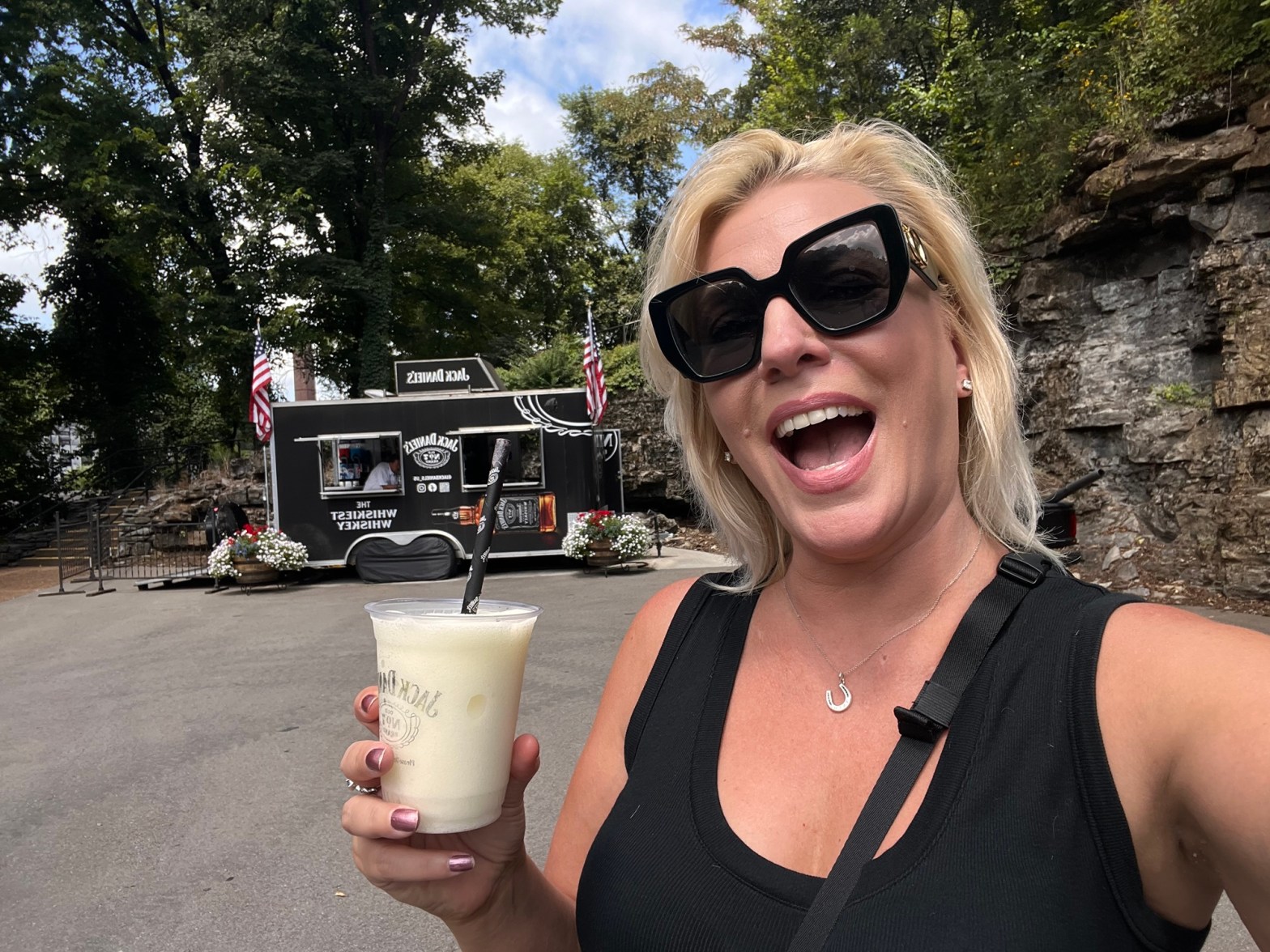
No trip through central Tennessee would be complete without stopping in Lynchburg, home of the world-famous Jack Daniel Distillery.
Although Lynchburg sits in a dry county—meaning you can’t buy alcohol in most local stores—the distillery has been producing Tennessee whiskey since 1866, making it America’s oldest registered distillery.
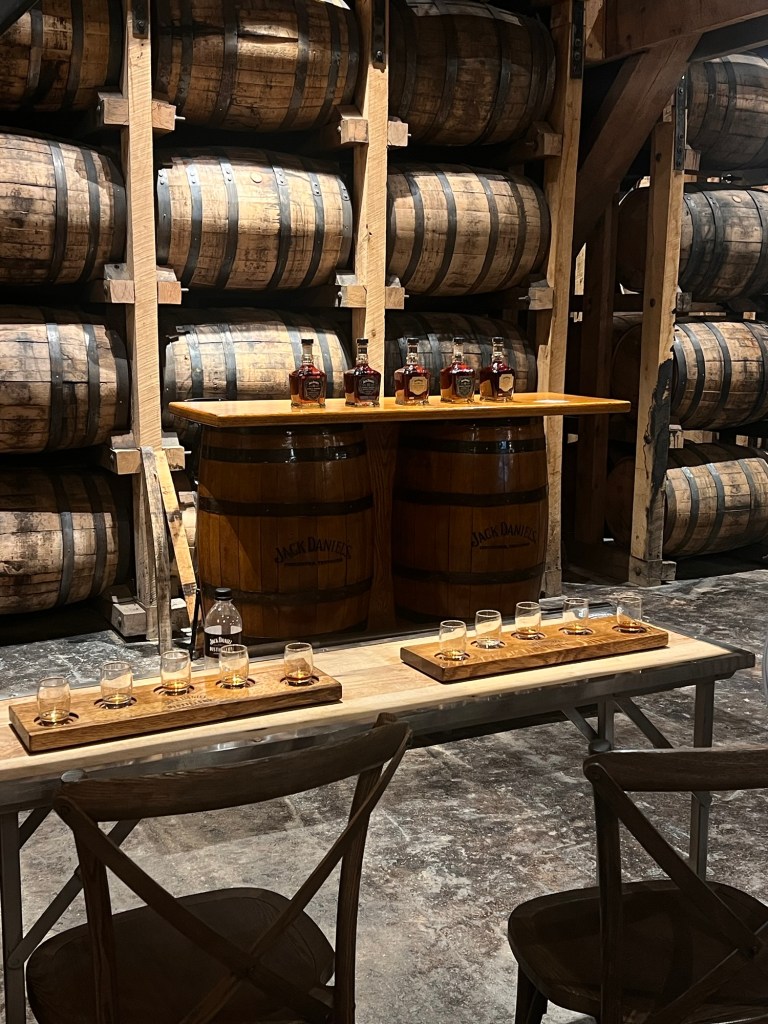
I signed up for the All About the Barrel Tour, and it quickly became one of the most fascinating distillery tours I’ve ever taken.
Rather than simply explaining how whiskey is made, this tour dives deep into one of the most important—and expensive—parts of the process: the barrels.
Jack Daniel’s uses handcrafted American white oak barrels that are built, charred, and used only once. After aging their whiskey, the barrels are sold around the world to age Scotch whisky, Irish whiskey, tequila, rum, maple syrup, hot sauce, and even craft beer. It’s amazing to think that a single Tennessee barrel continues influencing flavors across the globe long after it leaves Lynchburg.
One of the highlights of the tour is seeing how each barrel is toasted and charred to create what distillers lovingly call the “alligator char”—a cracked interior surface that resembles alligator skin. That char is responsible for much of the whiskey’s signature caramel, vanilla, and smoky flavors.
But perhaps the most remarkable part of the entire operation isn’t the whiskey.
It’s the water.
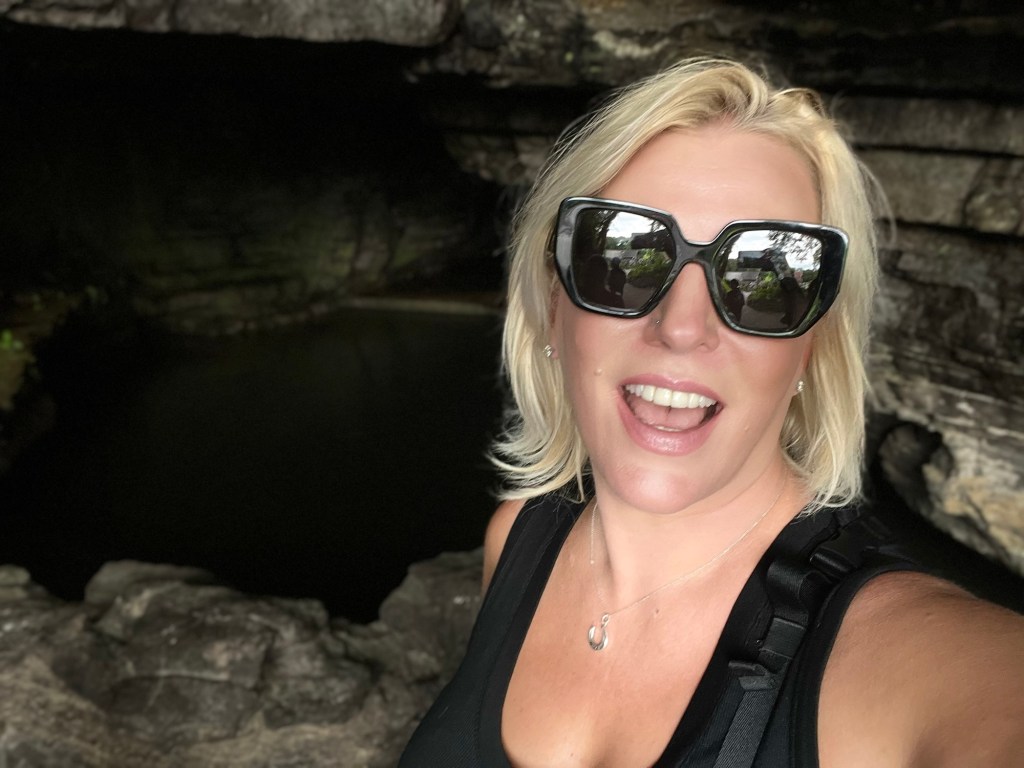
Every drop begins in Cave Spring Hollow, a breathtaking limestone cave that naturally filters water to a constant 56 degrees year-round. The mineral-rich, iron-free spring produces around 800 gallons of pristine water every minute, creating the perfect foundation for Jack Daniel’s signature whiskey.
Standing beside the cave, surrounded by towering limestone cliffs and crystal-clear water, it was easy to understand why this exact location was chosen over 150 years ago.
What impressed me even more was the company’s commitment to sustainability.
Very little goes to waste here.
The sugar maple used during the charcoal mellowing process eventually becomes part of Jack Daniel’s line of premium grilling charcoal. Used grain from production becomes livestock feed for nearby farms. Even the spent barrels find second lives around the world.
It’s refreshing to see such an iconic company embracing practices that honor both craftsmanship and conservation.
Our tour guide was absolutely fantastic.
She somehow managed the perfect balance of corny dad jokes, fascinating history, and genuine enthusiasm that kept everyone engaged from beginning to end. You could tell she genuinely loved sharing the story of Jack Daniel’s.
Naturally, I couldn’t leave empty-handed.
A commemorative shot glass found its way into my bag, along with one of my favorite souvenirs of the entire trip—a genuine piece of a Jack Daniel’s whiskey barrel that’s destined for my fireplace mantel back home.
Small-Town Southern Charm
Before leaving Lynchburg, I wandered around the historic town square.
It’s exactly what you’d imagine a Southern courthouse square should feel like.
Brick storefronts.
Friendly shop owners.
Plenty of Jack Daniel’s memorabilia.
Local cafés serving comfort food.
It’s the kind of town where people still wave as they pass by, and nobody seems to be in much of a hurry.
The Storm They Tried to Warn Me About
As I was leaving town, several locals casually mentioned they had seen lightning.
But they didn’t say it like Californians do.
They exchanged knowing looks.
Their voices lowered ever so slightly.
“Oh…there’s been lightning.”
I remember thinking…
Okay?
Where I’m from, lightning is exciting.
You watch it from your patio.
Maybe post a picture on Instagram.
Five minutes later…
I understood.
The sky opened.
Rain came down so hard that my windshield wipers surrendered almost immediately. I was driving a rented Jeep Wrangler with stock tires on a winding two-lane highway, gripping the steering wheel a little tighter than I’d like to admit.
Then something happened I’d never experienced before.
The rain stopped.
But the road didn’t dry.
Instead, the blazing Tennessee pavement transformed the remaining water into thick clouds of steam, creating pockets of fog that rose directly from the highway.
I wasn’t just driving through rain anymore.
I was driving through clouds.
Welcome to a Southern summer.
Art Worth Racing the Clock For
My goal was to reach Chattanooga before the Hunter Museum of American Art closed.
Mission accomplished.
Perched dramatically atop an 80-foot bluff overlooking the Tennessee River, the Hunter Museum is one of the city’s architectural treasures. It beautifully blends an elegant 1905 mansion with striking contemporary additions of glass and steel, creating a museum that feels just as much like a work of art as the collections inside.
The galleries exceeded every expectation.
I stumbled upon a Jacob Lawrence painting I had never seen before—a rare treat for someone who admires his powerful storytelling through bold color and movement.
Then I rounded a corner…
…and stopped.
Completely.
Frozen.
Before me hung one of the most beautiful portrait of Misty Copeland I have ever seen.
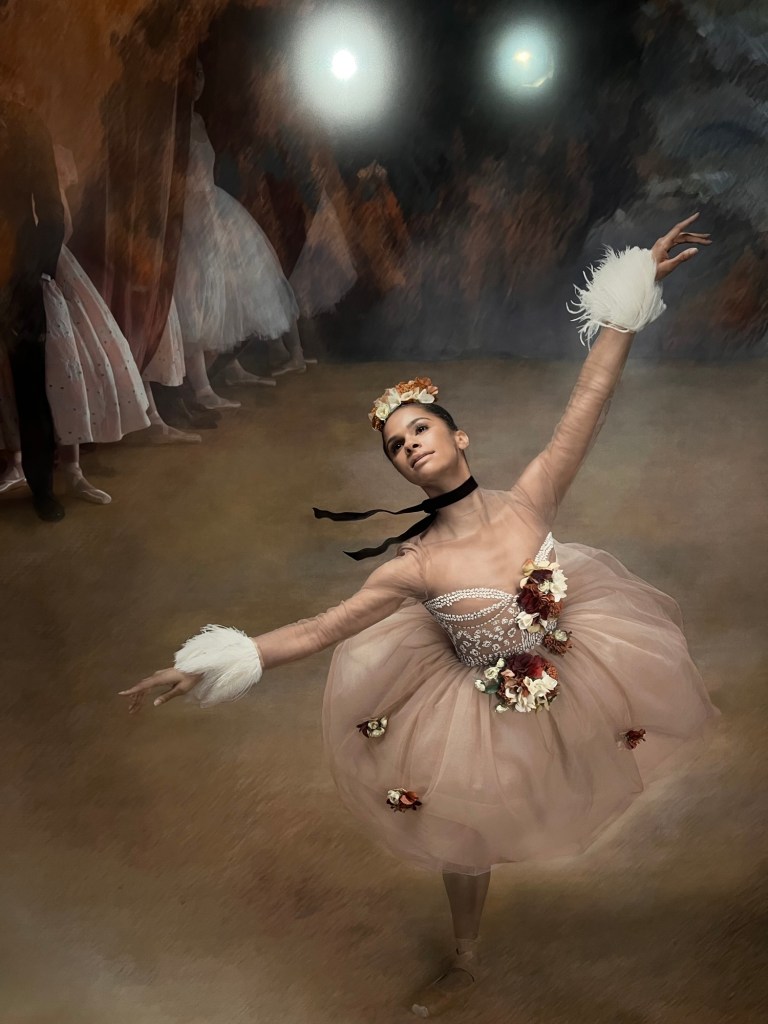
Inspired by the graceful compositions of Edgar Degas, the artwork captured everything that makes Copeland extraordinary: strength, elegance, discipline, vulnerability, and effortless beauty.
I stood there for several minutes.
No phone.
No pictures.
Just quietly taking it in.
Some artwork demands your attention.
This was one of those pieces.
I also absolutely loved the colorful, imaginative exhibition by Saya Woolfalk, whose vibrant installations blend science fiction, mythology, fashion, and social commentary into immersive worlds that invite visitors to imagine new possibilities for humanity.

It was joyful.
Playful.
Thought-provoking.
Exactly the kind of exhibit that makes contemporary art so much fun.
Beneath the Walnut Street Bridge
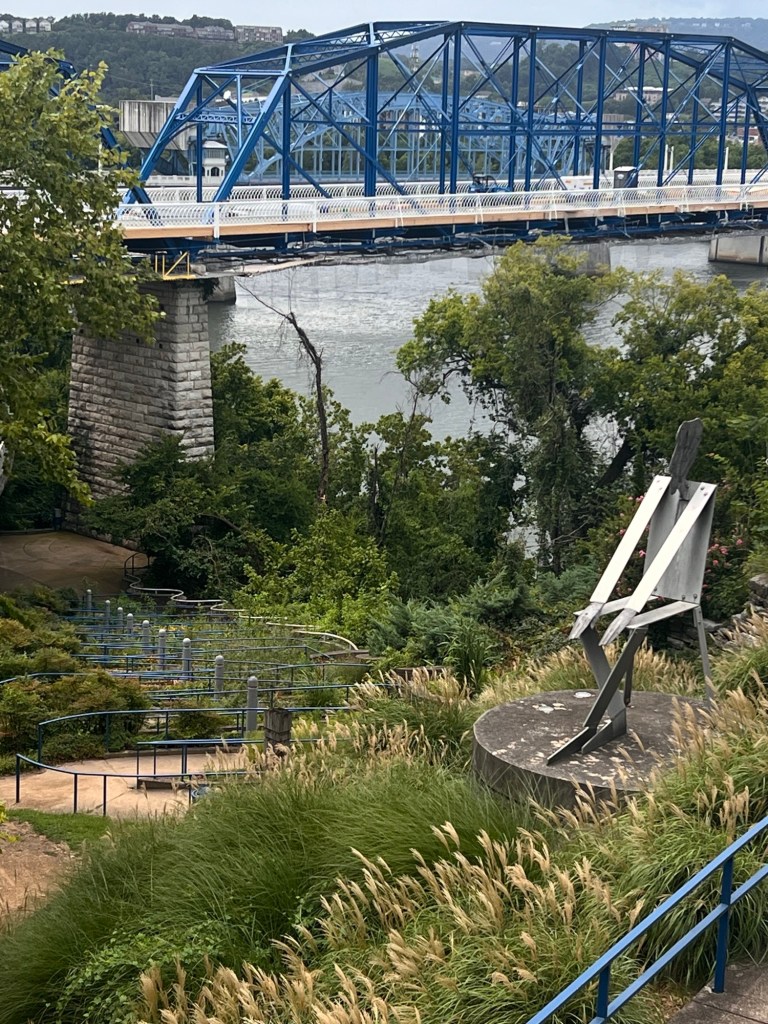
After the museum closed, I wandered the grounds and made my way toward Chattanooga’s iconic Walnut Street Bridge.
Built in 1891, it’s one of the world’s longest pedestrian bridges today, stretching gracefully across the Tennessee River.
Unfortunately, portions were closed for construction, so I couldn’t walk across it.
Instead, I wandered beneath it, where public art, shaded pathways, and a perfectly placed bench invited visitors to pause.
And pause I did.
Travel isn’t only about beautiful scenery.
Sometimes it’s about confronting history.
Like many places across the American South, Chattanooga carries painful stories that deserve to be remembered. The Walnut Street Bridge and nearby areas are connected to a broader history of racial terror during the late 19th and early 20th centuries, when Black Americans across the South were falsely accused, denied due process, and murdered by lynch mobs.
Reading about these atrocities in books like Stamped by Ibram X. Kendi and Jason Reynolds is important.
Standing in a place where those events unfolded is something entirely different.
It transforms history from words on a page into something deeply human.
It also deepened my appreciation for courageous journalists and activists like Ida B. Wells, whose fearless anti-lynching investigations exposed these crimes and challenged a nation to confront its own brutality.
Travel has a remarkable way of expanding our understanding of the world.
Sometimes that means breathtaking views.
Sometimes it means difficult truths.
Both matter.
Learning our history—even the painful parts—isn’t about dwelling on the past. It’s about honoring those who suffered, recognizing those who fought for justice, and continuing to build a future rooted in compassion, equality, and truth.
Ending the Day on a Delicious Note
After a day packed with history, storms, art, and reflection, I was ready for dinner.
I found exactly what I needed at Mayan Kitchen, where I treated myself to an order of homemade pupusas.
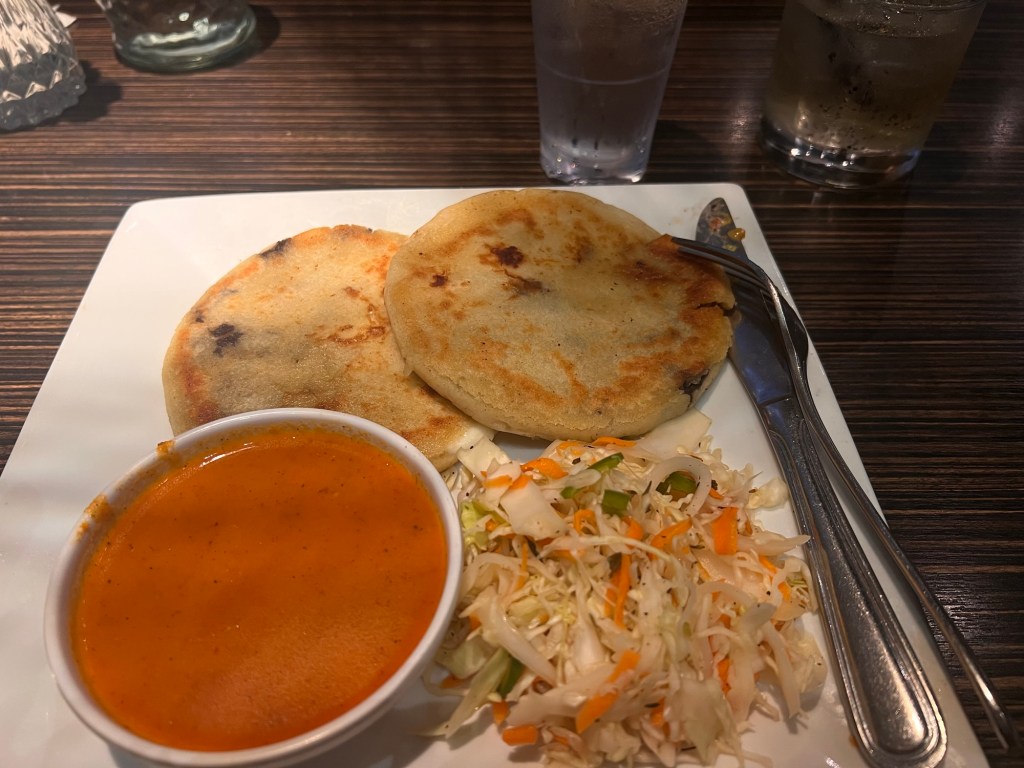
They were absolutely divine.
Warm.
Cheesy.
Perfectly crisp.
Exactly the comfort food I didn’t know I needed after an unforgettable day.
I headed back to my hotel early, knowing tomorrow would be filled with even more Chattanooga adventures.
If today taught me anything, it’s that Tennessee has a way of surprising you.
Sometimes with whiskey.
Sometimes with thunderstorms.
Sometimes with world-class art.
And sometimes with the kind of history that reminds us why travel matters in the first place.

